Newport Beach · $250–$700
Slab leak detection and repair in Newport Beach
Many Newport Beach homes have expensive finished floors over original copper lines. Finding a slab leak precisely, and fixing it without tearing out stone or hardwood, matters more here than almost anywhere.
Answered 24/7
Nights, weekends, holidays
Licensed local plumbers
Licensed in California
Pinpoint locating
Acoustic, thermal, tracer gas
Price ranges up front
Know the range before they come
Where slab leaks show up in Newport Beach
Eastbluff, Harbor View Hills, Westcliff, Dover Shores and much of Newport Heights were built from the 1950s through the 1970s, many as single-story homes on slabs. A lot of them have been remodeled inside but still run on the original copper under the floor.
On the Balboa Peninsula and Lido Isle, homes are close to the water table and many are on raised or newer foundations, so a wet floor there can also mean groundwater or a crawlspace issue. Newer homes in Newport Coast tend to have fewer slab problems.
Finding the leak without wrecking the floor
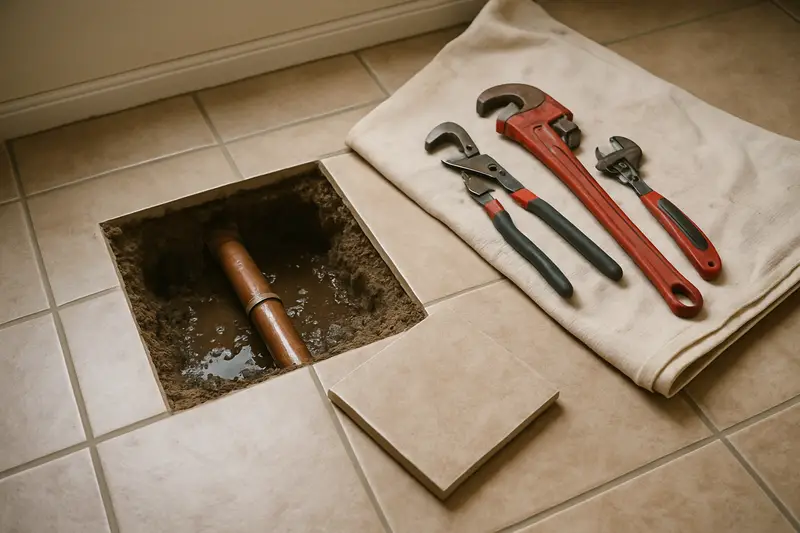
With natural stone, large-format tile or wide-plank hardwood, every square foot opened is expensive. The plumber should pinpoint the leak with acoustic listening, thermal imaging and pressure tests before anything is cut, and tell you how sure they are of the location.
If the floor does need to come up, ask whether the plumber can work from a closet, cabinet base or garage side instead, and who will handle patching and refinishing.
Reroute is often the better choice
Rerouting runs new pipe through the attic or walls and leaves the old line under the slab. In a home with high-end finished floors, a reroute is often cheaper overall than opening the slab, even before counting the cost of matching stone or refinishing hardwood.
In two-story homes, the plumber may route through interior walls or soffits. That takes more planning but still avoids the floor.
- Detection: typically $250 to $700
- Spot repair through the slab: about $1,500 to $4,500, plus floor restoration
- Rerouting one line through the attic or walls: about $2,000 to $6,500
What to do first
Close the cold inlet valve on top of the water heater if the leak seems hot-side; otherwise shut the main. Photograph damp flooring before anything is moved and check your homeowners policy, since many cover access and water damage but not the pipe itself. Keep the repair invoice for a possible bill adjustment from your water provider.
Older pipe in renovated homes
It is common in Newport Beach for a home to look new inside after a major renovation while the supply lines under the slab are original. If you bought a remodeled home, ask the seller or the previous contractor whether the plumbing under the floor was replaced. If nobody knows, assume it was not, and treat any warm patch, hissing sound or jump in the water bill as a reason to test.
Testing early, before water has spread under the floor, keeps the repair smaller and protects the finished floors.
Questions to ask the plumber
Ask how the leak was located and how precise the mark is, and whether there is any sign of a second leak elsewhere on the same line. For a reroute, ask for the planned route through the house and the number and size of wall or ceiling openings. For a spot repair, ask how large the floor opening will be and who will restore the finish.
Get a written estimate that spells out permits, drywall patching, paint and any flooring work, and ask about the warranty on both labor and materials. In a home with costly finishes, a clear scope up front matters as much as the plumbing price.
If you are planning a remodel in the next few years, mention it. A plumber can sometimes route the new pipe so it fits the future layout, saving you from opening the same walls twice.
Newport Beach neighborhoods and their plumbing
Homes in Eastbluff, Harbor View Hills, Dover Shores and much of Newport Heights date from the 1950s to the 1970s. Many have been remodeled or expanded, sometimes more than once, but the original copper under the slab often stays in place. Those lines are now 50 to 70 years old, and the hot side usually fails first.
Corona del Mar has a wide mix, from older cottages on raised foundations to new rebuilds on slabs. On the Peninsula, Balboa Island and Lido Isle, homes sit close to the water table, and moisture can come from groundwater as well as plumbing. A meter test tells you which before anyone starts opening walls or floors.
Protecting finished floors
Many Newport Beach homes have natural stone, large tile or wide-plank hardwood, sometimes running through most of the ground floor. Matching or refinishing those floors after a slab repair can cost more than the plumbing itself. That is why precise locating matters so much here, and why so many owners choose a reroute.
Before work starts, ask the plumber to show you where they have marked the leak and how confident they are. If the floor must be opened, agree in advance on the size of the opening, who will patch the concrete, and who will restore the flooring. Keep spare tiles or boards if you have them; they make a clean repair far easier.
Two-story homes and routing options
In single-story homes, rerouting through the attic is straightforward. In two-story homes, the plumber may run new pipe through interior walls, soffits or closets to reach the upstairs bathrooms. That takes more planning but still leaves the floor alone. A good plumber will walk the house with you and suggest the route that means the fewest openings in finished rooms.
If the home has already had leaks on both the hot and cold sides, a full repipe may cost less over the next decade than repairing leaks one at a time. Asking for a repipe quote alongside the leak repair lets you compare the two with real numbers.
Insurance, HOAs and timing
Many homeowners policies cover the cost of reaching the leak and the water damage it caused, but not replacing the pipe. Photograph any damp flooring and baseboard before it is moved. In HOA communities, check whether the association needs notice before a plumber works on shared walls or common areas.
Detection is usually a single visit. A reroute or spot repair is often done in a day or two, with extra time for floor restoration if the slab was opened. Seepline connects you with a licensed local plumber who serves Newport Beach and can explain the options before any floor is touched.
Questions people ask
Can a slab leak be fixed without removing my stone floors?+
Often, yes. A reroute through the attic or walls usually avoids the floor entirely.
My home is on the Peninsula. Is it a slab leak or groundwater?+
It can be either. A meter test with everything off tells you whether the water is coming from your plumbing.
Is a reroute worth it for one leak?+
In homes with original copper and costly floors, many owners choose a reroute to avoid a second leak and a second floor repair.