Los Angeles County · 24/7
Leak Detection in Bellflower, CA
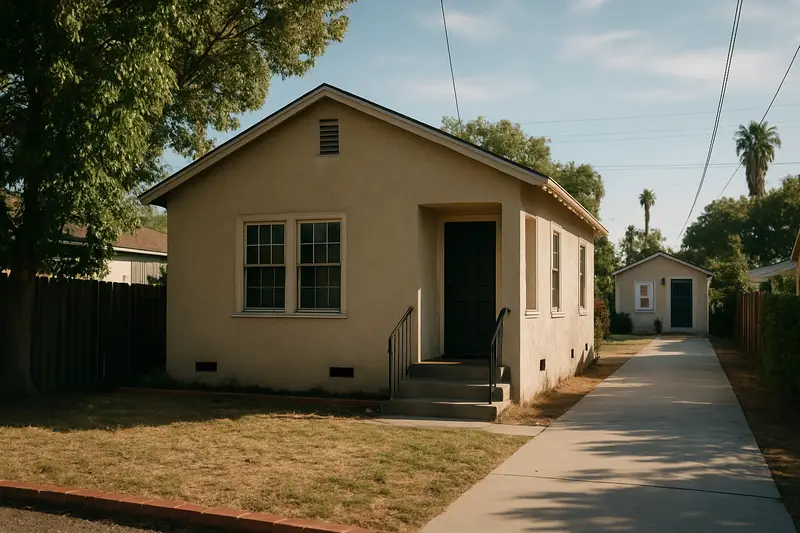
Bellflower's homes are small, older and often built on long, narrow lots with a second unit or addition out back, which means long pipe runs and plenty of joints between the meter and the last faucet.
Answered 24/7
Nights, weekends, holidays
Licensed local plumbers
Licensed in California
Pinpoint locating
Acoustic, thermal, tracer gas
Price ranges up front
Know the range before they come
Houses and pipes in Bellflower
Bellflower was a farming and dairy community before it filled in with homes in the 1940s and 1950s. Many houses are modest single-story homes, some on raised foundations from the earlier years and many on slabs from the post-war boom.
A distinctive feature is the deep lot. Plenty of Bellflower properties have a rear house, a granny flat or a converted garage behind the main home, and an accessory dwelling unit is increasingly common. The water line to the back unit is often a long run under the yard, the driveway or both, branching off the original service.
Leaks typical in Bellflower
Long runs to rear units are a frequent source of hidden leaks. Because they're often older or were added without much documentation, they can be hard to trace. A plumber will close valves to split the front house from the back and tell which side is leaking before locating the spot.
In raised-foundation homes, leaks show up in the crawlspace; in slab homes, as warm floors or a meter that won't stop. Galvanized pipe from the 1940s still turns up in older Bellflower homes and is usually best replaced once it starts leaking.
Different parts of Bellflower are served by different water providers, including a mutual water company and private utilities. Your bill tells you which one to contact about high-bill leak adjustments.
Typical Bellflower leak costs
| Job | Typical range |
|---|---|
| Locating a leak in the main house | $150–$600 |
| Locating a leak on a long line to a rear unit | $250–$700 |
| Crawlspace pipe repair | $250–$900 |
| Replacing a line to a back house or ADU | $1,500–$5,000+ |
| Repiping a small slab home | $4,500–$9,000 |
Front house, back house: splitting the problem
On a deep Bellflower lot with a rear unit, the first job in any leak call is to figure out which building the water is going to. If there's a separate shutoff for the back unit, closing it while watching the meter answers that in minutes. If there isn't one, a plumber may need to add a valve before testing, which is also a useful improvement in itself. Once the leak is isolated to one side, locating the exact spot is far quicker.
Lines to rear units were often added decades after the main house, sometimes by owners rather than licensed plumbers, and they may run under concrete driveways, patios and garden beds. A line tracer maps the route so any repair hits the right spot the first time.
Water providers in Bellflower
Bellflower is served by more than one water company depending on the neighborhood, including small mutual water companies and larger investor-owned utilities. Your bill shows which one serves your address. That matters if you need to ask about the meter, report a leak on the street side or request a bill adjustment after a repair. Each provider has its own rules, so call the customer service number on your bill rather than assuming the city handles it.
Galvanized and early copper
Homes from Bellflower's earliest residential years were often built with galvanized steel pipe. Many have been repiped, but some still have galvanized lines in the crawlspace or walls, especially where a bathroom or kitchen was never remodeled. Signs include rusty water first thing in the morning, low pressure and drips at threaded joints. Once galvanized starts leaking, replacing the run is usually more sensible than patching. Post-war homes on slabs typically have copper, which brings the regional pattern of hot-side slab leaks after a few decades.
Adding an ADU? Check the water line first
- 1
Find the existing line
Have the current service line and any branch to the rear of the lot traced and inspected.
- 2
Check size and pressure
An old, small line may not supply two households well, especially if it's galvanized.
- 3
Plan a separate shutoff
A valve for the new unit makes future leak checks and repairs much simpler.
- 4
Keep records
Save a sketch of where the new line runs so future owners and plumbers can find it.
Know your shutoff
Find and test the main valve once a year so it turns freely in an emergency.
Crawlspace checks for older Bellflower homes
If your home sits on a raised foundation, a look under the house twice a year is one of the cheapest ways to catch a leak. Use a strong flashlight from the access hatch and look for darker, damp soil under pipes, white mineral crust on fittings, rust trails along galvanized lines and any standing water. A musty smell when you open the hatch is another hint. If you find something, take a photo before calling; it helps the plumber know what to bring and how long the job might take.
Don't crawl in if you're not comfortable doing so, if there's standing water near wiring or if the space is too tight. A plumber does this routinely.
Slab homes on Bellflower's post-war streets
The homes built in Bellflower's busiest decade of growth are mostly modest single-story houses on concrete slabs. Their copper supply lines are now old enough that pinholes are common, particularly on the hot side. Watch for a warm patch in a hall or bathroom, a water heater that cycles at night and a bill that climbs steadily. In these homes, rerouting the hot line through the attic is usually the least disruptive fix, since it avoids breaking the floor and replaces the whole run at once.
Landlords with front and rear units
- Label the shutoff for each building so tenants can find it in an emergency
- Ask tenants to report damp spots, hissing sounds and hot floors right away
- If one meter serves both units, track gallons used so a leak stands out
- Have the line to the rear unit scoped or traced once so its route is on record
Worth a call if you notice
- A wet strip in the yard between the main house and a rear unit
- A meter that keeps moving with both houses' fixtures off
- Damp soil under a raised-foundation home
- Rusty water at the first tap in the morning
- A warm floor in a slab home
Bellflower leak questions
Can they tell if the leak is in the back house or the front?+
Yes, by closing valves to isolate each building and watching the meter. That narrows the search before any equipment comes out.
Is it worth replacing the line to a rear unit?+
If it's old galvanized pipe or has leaked before, replacing it (often trenchless) is usually better than repeated repairs.
Who do I call about the water bill in Bellflower?+
Whichever provider is named on your bill. Bellflower has more than one, and each sets its own leak adjustment policy.