Guide · updated 2026-10-02
Signs of a slab leak, and how to check each one
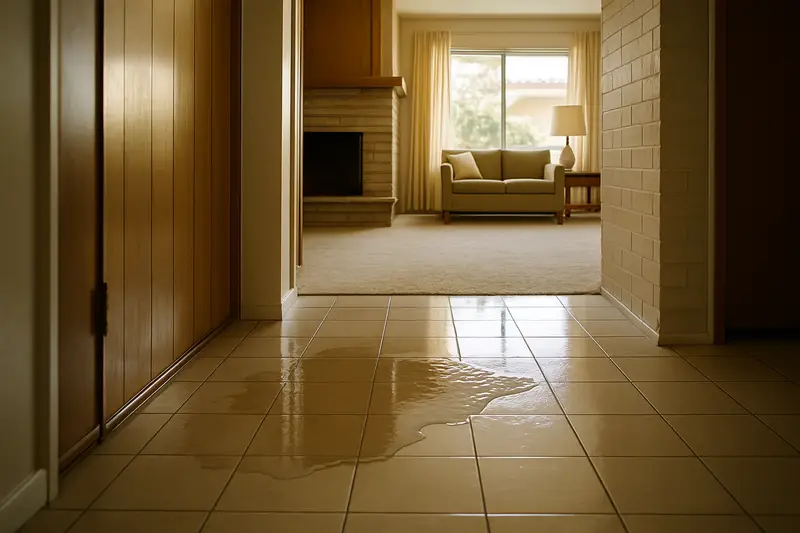
Slab leaks rarely announce themselves with a puddle. They show up as small, odd things (a warm floor, a sound, a bill) that are easy to explain away. Here's what to look for and how to test each sign.
1. A warm spot on the floor
Walk the house barefoot, especially hallways, the kitchen and bathrooms. A patch of tile or laminate that's warmer than the floor around it (sometimes noticeably hot) is the most specific sign of a hot-water slab leak. Pets often find it first and start sleeping in the same spot.
Check it: turn off the water heater's cold-water inlet for an hour. If the warm spot cools, the leak is on the hot line.
2. The sound of running water
Late at night, with everything off, put your ear to the floor in a quiet room. A faint hiss or trickle under the slab is water escaping under pressure. Sometimes it's audible near the water heater or at a hose bib.
3. The meter moves with everything off
This doesn't prove the leak is under the slab, but it proves there's a leak. Close the house shut-off: if the meter stops, the leak is inside, which in a single-story slab home often means under the floor.
4. The water heater runs more than it should
A hot-side leak means the heater is constantly refilling and reheating. If the burner seems to fire often when nobody's used hot water, or the gas bill has climbed along with the water bill, take note.
5. Damp flooring or carpet at the edges
Water under a slab finds the easiest way up: cracks, expansion joints, the edges of rooms. Carpet that's damp along a wall, a tack strip that's rusted, or laminate that's started to cup are all signs.
6. New cracks in tile or slab
Settling causes cracks too, so cracks alone don't mean a leak. A new crack combined with any other sign on this list is worth investigating, especially in north Orange County and Inland Empire neighborhoods with expansive clay soil.
7. A musty smell or mold at the baseboards
Persistent damp under flooring feeds mold. A musty smell in one room that ventilation doesn't clear, or dark spotting at the base of drywall, can point to water coming up from below.
8. Lower water pressure
A large leak diverts enough water to notice at the shower or a far bathroom. On its own, low pressure has many causes; alongside a moving meter, it's another clue.
Which signs mean act today
| Sign | How urgent |
|---|---|
| Water visibly coming up through the floor | Shut off the main now and call |
| Hot floor plus a moving meter | Shut the water heater inlet; book soon |
| Damp carpet or cupping laminate | Book within days; move furniture off it |
| High bill only, nothing visible | Run the meter checks, then book |
| New crack only | Monitor; check the meter |
What a plumber will do
A slab locate combines a pressure test (to confirm and to split hot from cold), thermal imaging, and acoustic listening across the floor to mark the spot. From there, the choice is between a spot repair or a reroute. Typical costs are in what leak detection costs.
How to do a proper meter test
- 1
Choose a quiet time
Early morning or late evening, when no one needs water.
- 2
Shut off automatic uses
Irrigation, pool autofill, ice makers, water softeners and evaporative coolers.
- 3
Read the meter
Note the reading and look at the low-flow indicator.
- 4
Wait
Wait at least thirty minutes, an hour if you can, without using water.
- 5
Read it again
Any change in the reading or movement of the indicator means water is flowing somewhere.
Hot-side versus cold-side signs
| Sign | More likely hot side | More likely cold side |
|---|---|---|
| Warm floor | Yes | No |
| Water heater running constantly | Yes | No |
| Meter moving with heater's cold valve closed | No | Yes |
| Damp flooring with no warmth | Possible | Yes |
| Higher gas or electric bill | Yes | No |
Signs that are often mistaken for slab leaks
- A warm floor above a heating duct or radiant heating system
- Damp carpet near a sliding door after rain or sprinkler overspray
- Hairline cracks in tile caused by settling rather than water
- A running toilet that makes the meter move
- Condensation from an air conditioner drain line
Why slab leaks are common in this region
Much of Southern California was built quickly in the decades after the war, with single-story homes on concrete slabs and copper supply lines running beneath them. Those pipes are now decades old, carrying hard water under constant pressure and, on the hot side, through daily heating and cooling cycles. Pipes can also rub against concrete or gravel as they expand and contract. Over time, these stresses wear through the pipe wall. The result is a familiar pattern for plumbers across the region, especially in neighborhoods built from the 1950s through the 1970s.
What to tell the plumber
When you call, share what you've noticed: which signs, where in the house, how long you've noticed them, the results of your meter test and the age of the home. Mention any previous leaks or repairs. If you've tested the hot side by closing the water heater's cold valve, share that too. These details help the plumber plan the visit, bring the right equipment and give you a more accurate idea of cost.
Trust your instincts
If something feels off, such as a floor that seems warmer than it should be or a bill that keeps creeping up, a meter test costs nothing and settles the question.
A quick checklist to print or save
- Walk the house barefoot and feel for warm patches
- Listen for running water at night with everything off
- Do a meter test with irrigation and the pool autofill off
- Check whether the water heater is firing with no hot water in use
- Look for cracks in tile, lifting laminate and damp carpet edges
- Sniff for musty smells near baseboards
- Compare water and gas bills with the same months last year
How long a slab leak can go unnoticed
Some slab leaks announce themselves within days with a hot floor or a hissing sound. Others go unnoticed for months, especially cold-side leaks where water drains away into the soil beneath the house. In those cases, the only clue may be a gradually rising water bill. That's why it's worth comparing bills by gallons used rather than dollars, and doing a meter test every so often in an older home, even when nothing seems wrong.
The longer a leak runs, the more water is wasted and the greater the chance of damage to flooring, baseboards and the soil under the slab. Acting on early signs is almost always cheaper than waiting.
If you rent
If you notice any of these signs in a rental home, tell your landlord or property manager in writing as soon as possible, with photos and a description. Turn off the water heater's cold supply if a hot-side leak is likely and the landlord agrees. Landlords are generally responsible for plumbing repairs, and early notice protects both of you.