Los Angeles County · 24/7
Leak Detection in Monrovia, CA
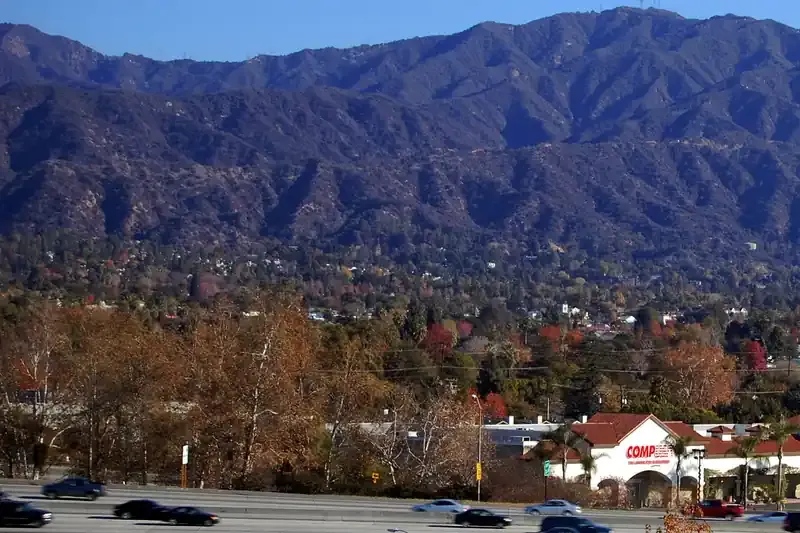
Monrovia was founded in the 1880s and kept much of its early town, with Old Town along Myrtle Avenue and blocks of Victorian and Craftsman homes. Above it, newer foothill neighborhoods climb toward Monrovia Canyon.
Answered 24/7
Nights, weekends, holidays
Licensed local plumbers
Licensed in California
Pinpoint locating
Acoustic, thermal, tracer gas
Price ranges up front
Know the range before they come
Houses and pipes in Monrovia
Central Monrovia has a high share of pre-1930 homes on raised foundations, many with galvanized supply pipe or a mix of old and newer pipe. The postwar decades filled the south side with slab ranch homes and copper, and foothill tracts to the north have larger homes on sloped lots.
The City of Monrovia operates its own water system and handles the meter and the street side.
Monrovia leak patterns
In the historic core, leaks come from rusted galvanized under the floor and inside walls. South of Huntington Drive, it's mostly slab leaks in midcentury copper, and on the foothill streets the risk shifts to service lines and high pressure on downhill lots.
Typical leak costs in Monrovia
| Job | Typical range |
|---|---|
| Locating a crawlspace leak | $150–$450 |
| Locating a slab leak | $250–$650 |
| Pressure regulator replacement | $300–$800 |
| Service line repair on a foothill lot | $900–$3,500 |
| Repipe of an older home | $6,000–$13,000 |
Old Town and the historic neighborhoods
Monrovia kept more of its early town than many San Gabriel Valley cities. Around Old Town and Myrtle Avenue, streets of Victorian and Craftsman homes date from the 1880s through the 1920s. These houses sit on raised foundations, and many still have galvanized supply pipe, sometimes with sections of newer copper spliced in. Leaks here often come from rusted threads under the floor or inside old walls, and the first sign may be a musty smell or a soft floorboard.
Crawlspaces as an advantage
Raised foundations make leaks in older Monrovia homes easier to reach once found. A plumber narrows the area with listening equipment or moisture readings, then confirms it from the crawlspace. Repairs and reroutes can often be done under the floor without opening walls. For owners of historic homes, that means less disruption to original plaster and woodwork.
South Monrovia slab homes
South of Huntington Drive, most homes were built after World War II on slabs with copper supply lines. These lines are now in the age range where slab leaks are common. Hard groundwater in the area speeds up wear. A warm floor, the sound of running water with fixtures off or a meter that never stops are the signs. Rerouting through the attic is usually the simplest fix.
Foothill homes and high pressure
North Monrovia climbs into the foothills toward Monrovia Canyon Park. Homes on the lower end of a pressure zone can see high pressure, which strains fittings, faucet cartridges and water heater relief valves. Pressure regulators wear out over time. Banging pipes, running toilets and dripping relief valves are signs. A quick pressure test tells you whether the regulator needs replacing.
Long, sloped service lines
Foothill lots often have long service lines that run up or down slopes. These lines can crack where the ground settles or where roots find a weak joint. A damp area on a slope or near a retaining wall is a common clue. Acoustic detection and tracer gas pinpoint the leak without trenching the whole yard.
The City of Monrovia water system
Monrovia operates its own water system. The city handles the meter and the street side; the line from the meter to the house is the owner's. If you see water near the meter or curb, call the city first. If your bill rises without explanation, a meter test is the next step.
Repiping a historic home
When galvanized is failing throughout an older Monrovia home, repiping is often the best long-term fix. Plumbers can route new lines through the crawlspace and attic to limit wall openings. Ask about permits, how long the work takes and how original finishes will be protected.
Before you call
Tell the plumber the home's age, whether it's on a crawlspace or slab, whether it's in Old Town, the south side or the foothills, and what you've noticed: rusty water, low pressure, warm floors, banging pipes or wet spots.
Victorian homes and old fixtures
A handful of Monrovia's Victorians still have original clawfoot tubs, pedestal sinks and wall-mounted faucets fed by exposed supply lines. Those old compression valves and supply tubes wear out and seep at the packing nut. The leak is small, but it runs into old wood floors that do not forgive standing water. Replacing worn stops and supply lines is quick work and protects the floor.
Monrovia Canyon and the north end
The streets closest to Monrovia Canyon Park sit on the steepest ground in town, with homes stepped up the slope and driveways that climb from the street. Service lines here are often long and run under retaining walls and terraced planting. After a wet winter, soil on these slopes can creep slightly, and an old copper or galvanized joint may give way months later. A wet step in a terraced yard, or water at the base of a wall in August, is worth a call.
Bungalow courts and shared meters
Monrovia has a number of older bungalow courts and small multi-unit properties, where several cottages share one meter. When the bill jumps, it's hard to know which unit is leaking. Closing the shutoff to each unit in turn while watching the meter narrows it down. Toilets and water heaters in the individual units are the usual culprits.
Newer condos near the station
Newer apartments and condos have been built near Monrovia's light rail station. In stacked units, a leak in one home often shows up as a ceiling stain in the unit below. Thermal imaging helps trace the source without opening several ceilings. Owners should check with their HOA about who is responsible for which pipes.
Hot summers and attic plumbing
Monrovia's summers are hot, and attics get very hot. When lines are rerouted through attics during slab leak repairs, they should be properly insulated and supported. Ask the plumber how they plan to protect attic lines from heat and how they will secure them to the framing.
Seasonal checks
Fall is a good time to check outdoor hose bibs, irrigation valves and the area around the meter, after a long, hot summer. Dry soil can shift and stress buried lines, and fittings on hose bibs often start dripping after heavy summer use.
Worth a call if you notice
- A musty smell in a Victorian or Craftsman crawlspace
- A warm floor tile in a 1950s home
- Banging pipes when a valve closes in a foothill home
- A wet patch near the curb on a dry day
- A city water bill that suddenly jumped
Monrovia leak questions
Who supplies water in Monrovia?+
The City of Monrovia's water system. Report anything at the meter or street to the city.
Is it normal for an old home to have rusty water?+
It is common, not normal. Rusty water usually means galvanized pipe corroding from the inside.
Why is my foothill home's pressure so high?+
Homes lower in a pressure zone get more pressure than plumbing is meant to handle. A working pressure regulator fixes that.
Can a plumber find a leak without opening plaster walls?+
Usually yes. Thermal imaging and moisture meters narrow it down so only a small opening is needed.