Los Angeles County · 24/7
Leak Detection in Lomita, CA
Lomita is a small, quiet city of about two square miles at the foot of the Palos Verdes Peninsula, between Torrance and Harbor City. It incorporated in 1964, and its streets of modest postwar homes and newer townhomes run their own city water system.
Answered 24/7
Nights, weekends, holidays
Licensed local plumbers
Licensed in California
Pinpoint locating
Acoustic, thermal, tracer gas
Price ranges up front
Know the range before they come
Houses and pipes in Lomita
Most of Lomita's homes are single-story houses from the 1940s through the 1960s, on slabs with copper supply lines or, in the oldest, on raised floors with galvanized pipe. Many lots have a rear unit or have been rebuilt with townhomes, especially near Narbonne Avenue and Pacific Coast Highway. The south side climbs gently toward the peninsula.
The City of Lomita runs its own water system for most of the city, and California Water Service serves the southwest corner. The utility on your bill owns the meter and the street side.
Lomita leak patterns
Lomita's postwar slab homes see slab leaks from aging copper, older raised-floor homes see galvanized leaks, and rear units and townhomes add yard line and ceiling leaks.
Typical leak costs in Lomita
| Job | Typical range |
|---|---|
| Slab leak detection in a Lomita home | $250–$600 |
| Testing a front house and back unit | $200–$550 |
| Tracing a townhome ceiling leak | $250–$650 |
| Rerouting a slab line through the attic | $1,500–$4,500 |
| Whole-house repipe, postwar Lomita home | $5,500–$12,000 |
A small city with its own water
Lomita is one of the few small South Bay cities that runs its own water system. The City of Lomita serves most homes, and Cal Water serves the southwest corner. For a leak, that means the city handles anything at the meter box or in the street, and the owner handles everything past the meter.
Postwar slabs and old copper
Most Lomita homes went up in the 1940s through the 1960s, on slabs with copper supply lines. That pipe is now old enough that pinholes are common, especially on the hot side. A warm floor near the water heater or kitchen, a hiss at night or a meter that won't rest are the classic signs.
Older homes on raised floors
Lomita's oldest homes, from before the war, sit on raised floors with galvanized pipe. That pipe rusts from the inside, causing low pressure and brown water before it finally leaks at a joint.
Back units and townhomes
Many Lomita lots have a back unit or have been rebuilt with townhomes, especially near Narbonne Avenue and Pacific Coast Highway. Back units are fed by branch lines under the yard, and townhomes see leaks from upstairs bathrooms.
At the foot of the peninsula
Lomita's south side rises toward the Palos Verdes Peninsula. Homes there may see slightly higher pressure, and leaks on sloped yards may surface downhill from the break.
What to tell the plumber about a Lomita home
Say whether you're in a postwar slab home, an older house on a raised floor, a back unit or a townhome, whether the City of Lomita or Cal Water sends your bill, and what you've noticed. If there's a rear unit on the same meter, say whether you've tried closing its valve while watching the dial.
Narbonne Avenue and the town center
Narbonne Avenue is Lomita's main street, and the blocks around it hold a mix of older homes, small apartment buildings and newer townhomes. Some of the oldest homes here have been in the same families for decades and still have original pipe. In those, a slow leak under a raised floor can go unnoticed for a long time, so a look under the house once or twice a year is worth it.
Lomita's railroad museum and older homes
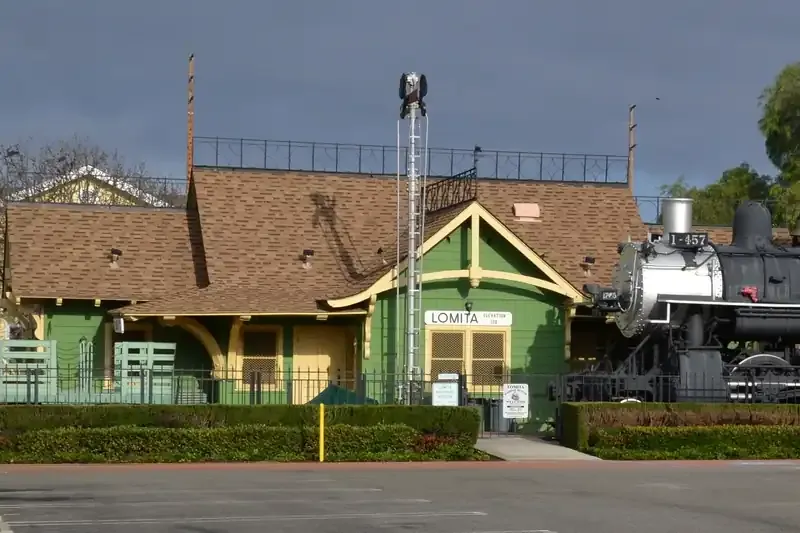
The Lomita Railroad Museum, a small replica of a Victorian-era depot, sits among quiet residential streets, many of them built up in the 1940s and 1950s. Homes from that era typically have copper supply lines laid in or under the slab. After seventy years of service, those lines thin out, and pinholes appear where the water turns sharply, at bends and near the heater.
Lomita's water system
Because the City of Lomita runs its own water system, residents call city hall rather than a large utility when water is surfacing at the meter or in the street. The city handles meter and main repairs on its side. Behind the meter, the owner is responsible, and a plumber with locating equipment is the next call.
Back units and garage conversions
Lomita has seen a wave of ADUs and garage conversions in recent years. Each needs water, and often the line was tapped into the main house's existing copper and run under the yard. The tie-in, especially where new PEX meets old copper, can fail. Low pressure at the ADU or a damp patch along its path is a clue.
Hard water in a small city
Lomita's supply, like much of the South Bay's, includes groundwater that's hard enough to scale water heaters and fixtures. Draining a tank heater once a year and watching for white crust on fittings helps. A tank that rumbles or shows rust at the base is near the end of its life.
Reroute or repipe in Lomita
For a single slab leak in a Lomita home, a reroute through the attic is often enough. If the house has had more than one, a full repipe is usually the better value, and most single-story homes are done in two to four days.
Checking a Lomita meter
Most Lomita meters sit in a concrete box near the sidewalk. Lift the lid with a screwdriver, turn off every fixture in the house and watch the small leak indicator on the dial for two minutes. If it turns, write down the reading, wait an hour without using water and read it again.
Pacific Coast Highway townhomes
Along Pacific Coast Highway and near the Torrance line, many older Lomita lots have been rebuilt as rows of townhomes. These usually have newer plumbing, so their leaks come from upstairs showers, toilets, washers and water heater connections in the garage. A stain on a first-floor ceiling or damp baseboard in a stairwell is the usual sign. Check the CC&Rs for who pays for what before the repair.
Lomita's south side and Palos Verdes runoff
Lomita's southern streets sit just below the Palos Verdes hills, and winter runoff can leave yards there soggy for days after a storm. That can hide a leak or cause a false alarm. Wait for a few dry days, then do a meter test. If the dial moves with everything off, it's a pipe, not the weather.
Worth a call if you notice
- A warm patch on a Lomita kitchen floor
- Wet ground along the path to a back unit
- A ceiling stain in a townhome off Narbonne
- Rusty water from an older home's tub
- A City of Lomita water bill far above the last one
Lomita leak questions
Does Lomita have its own water system?+
Yes. The City of Lomita serves most of the city, and Cal Water serves the southwest corner. Your bill shows which one owns your meter.
Our Lomita house has a back unit on the same meter. How do we test it?+
Shut off both homes and watch the meter, then close the rear branch valve. If the dial stops, the leak is on the back unit's line.
Is a reroute a good option in a Lomita slab home?+
Often. A single-story Lomita house usually has an accessible attic, so a new line can be run overhead without breaking floors.
Does being near the Palos Verdes hills change anything?+
On the south side, slightly higher pressure and sloped yards mean leaks may surface downhill from the actual break.