Los Angeles County · 24/7
Leak Detection in Wilmington, CA
Wilmington grew up around Phineas Banning's port in the 1850s and 1860s, became part of Los Angeles in 1909 and spent the next century beside oil wells, refineries and container terminals. Its homes are modest, often old, and frequently share a lot with a second unit.
Answered 24/7
Nights, weekends, holidays
Licensed local plumbers
Licensed in California
Pinpoint locating
Acoustic, thermal, tracer gas
Price ranges up front
Know the range before they come
Houses and pipes in Wilmington
Much of residential Wilmington, north of Anaheim Street and around Banning Park, is small houses from the 1910s through the 1940s. Many sit on raised floors with galvanized supply pipe, and many lots carry a converted garage or a second cottage at the back. Postwar blocks farther north and west have 1950s homes on slabs with copper.
LADWP provides Wilmington's water and owns the meter and street side. The owner's line runs from the meter to the house, and on a lot with two or three units it often branches underground to each one.
Wilmington leak patterns
Aging galvanized pipe under raised floors is the most common source of Wilmington leaks, along with buried branch lines feeding rear units. Postwar slab homes see slab leaks in their old copper, and a shared meter means a hidden leak in one unit raises the bill for everyone on the lot.
Typical leak costs in Wilmington
| Job | Typical range |
|---|---|
| Finding a leak under a raised-floor Wilmington house | $150–$450 |
| Tracing a buried branch line to a rear unit | $200–$550 |
| Slab leak detection in a 1950s Wilmington home | $250–$600 |
| Replacing a short run of failed galvanized pipe | $300–$1,200 |
| Whole-house repipe, small older Wilmington home | $5,000–$11,000 |
Banning's port town
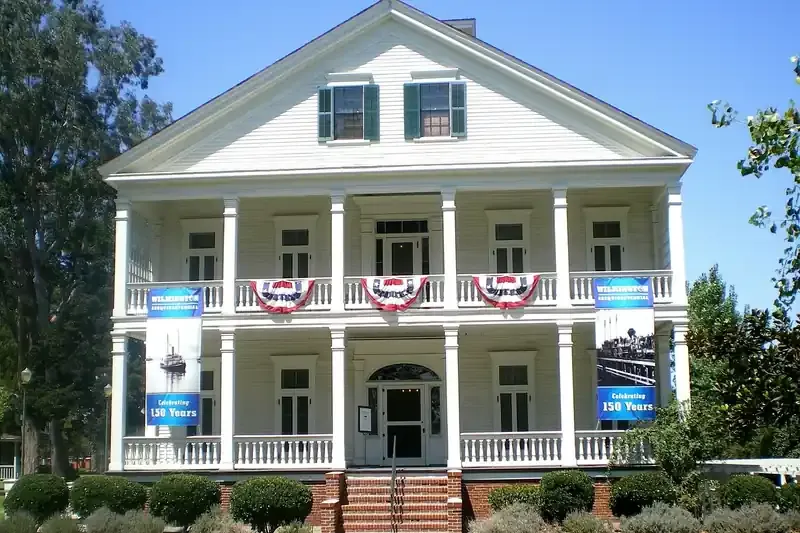
Phineas Banning built a wharf and a town here in the late 1850s and named it after his hometown in Delaware. The Banning House, now a museum in Banning Park, and the Drum Barracks Civil War Museum are reminders of how old this part of Los Angeles is. Some Wilmington houses date from the early 1900s, and many more were built in the 1920s and 1940s as the port and the oil field grew. Few still have all their original plumbing, but most have at least some galvanized pipe left under the floor.
Galvanized pipe and morning rust
Galvanized steel corrodes from the inside. In a Wilmington home that still has it, the first sign is often rust-tinted water when a tap is opened in the morning, followed by weak pressure at one fixture and finally a drip at a threaded joint. Under a raised floor that drip may go unnoticed for a long time, slowly wetting the soil and the wood above it. A plumber can usually find it from the crawlspace, and the repair is often a section of new pipe rather than a full repipe, at least the first time.
Rear units and buried branch lines
Many Wilmington lots hold a second home, a converted garage or a small apartment behind the front house. Those back units were often plumbed by running a branch line underground from the front house or straight from the meter. Those lines are old, shallow and rarely shown on any drawing. When the yard between the two buildings stays soft or a patch of weeds stays green in August, that branch line is the first suspect. Acoustic equipment can follow it and find the break without digging up the whole yard.
The oil field and the ground under Wilmington
The Wilmington Oil Field, one of the largest in the country, sits under the harbor area. Pumping in the 1940s and early 1950s caused the ground around the harbor to sink dramatically, by more than twenty feet at the center near Terminal Island, until water injection programs stopped it in the 1950s and 1960s. The ground has been stable since, and today's Wilmington leaks come from old pipe, not subsidence, but it is one reason the area's older underground utilities have been rebuilt many times.
One meter, several households
With more than one unit on a meter, a leak in one unit shows up on a bill everyone shares. Before calling, try the shutoff test: close each unit's valve one at a time and watch the meter's leak indicator. Knowing which branch is leaking cuts the search time and the cost.
Repair or repipe in Wilmington
If a Wilmington house has had two or three galvanized leaks in a few years, or the water is consistently rusty, replacing the supply piping is usually the better investment. Small one-story houses are among the quicker repipes, often finished in two or three days. For a 1950s slab home with one leak, rerouting the failed line through the attic or the walls is often enough.
What to tell the plumber about a Wilmington home
Mention whether the house is on a raised floor or a slab, how many units share the meter, whether you have noticed rusty water and where you see dampness. If you have done the shutoff test, say which unit stopped the meter.
Crawlspace checks in Wilmington's older homes
Twice a year, open the crawlspace hatch with a strong flashlight. Look for soil that is darker than the rest, white or orange crust on pipe joints, drips on the underside of the floor and any standing water. A musty smell is a hint even when nothing is visible from the hatch. Photograph anything you see; it helps a plumber decide what to bring. Don't crawl in if the space is tight, wet near wiring or home to pests; plumbers working in Wilmington do this every week and have the gear for it.
Port traffic, heavy trucks and buried lines
Wilmington sits next to some of the busiest truck routes in the country, and streets like Anaheim Street, Alameda Street and Pacific Coast Highway carry container traffic day and night. Homes along those corridors sometimes have service lines under driveways and parkways that take constant vibration and heavy loads from parked trucks. Old galvanized or copper under a driveway that cracks or settles is a common place for a Wilmington leak to start. A soft spot or a fresh crack in the concrete over the line's path is worth mentioning when you call.
Wilmington's refineries, pipelines and digging safely
Wilmington is crossed by oil and fuel pipelines, and several refineries sit on its edges. Before any digging in a Wilmington yard to reach a leaking water line, the plumber should call 811 so that buried gas, electric and pipeline routes are marked. It adds a short wait, but on these blocks it is not optional. Locating the leak precisely first keeps the hole small.
Worth a call if you notice
- Rust-colored water from a Wilmington tap first thing in the morning
- A soft, wet patch of dirt between the front house and a rear unit
- Musty smell from the crawlspace hatch
- A warm spot on the floor of a 1950s slab home
- An LADWP bill that climbs every cycle on a multi-unit lot
Wilmington leak questions
Who supplies water in Wilmington?+
LADWP. It owns the meter and the street side; everything from the meter onto the property, including lines to rear units, is the owner's.
Why is my Wilmington tap water brown in the morning?+
In older homes, rust from galvanized pipe often colors the first water of the day. It is a sign the pipe is corroding inside and may start leaking at the threads.
How do I tell which unit on my lot has the leak?+
Close the shutoff for each unit one at a time and watch the meter. When the dial stops, you have found the branch with the leak.
Is it worth repiping an old Wilmington house?+
If the house still has much of its original galvanized pipe and leaks keep showing up, a repipe usually costs less over time than repeated spot repairs.