Los Angeles County · 24/7
Leak Detection in Altadena, CA
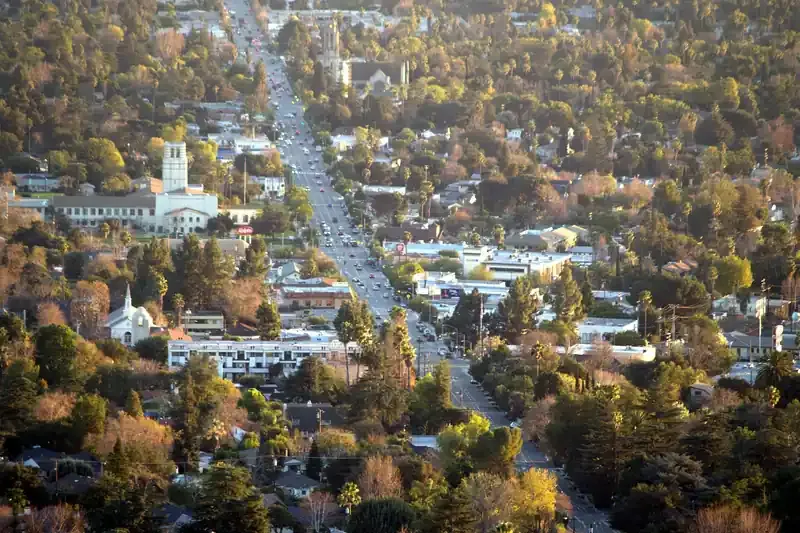
Altadena is an unincorporated foothill community above Pasadena, built up from the 1910s onward and badly hit by the Eaton Fire in January 2025. Today it holds two kinds of plumbing side by side: old pipe in the homes that survived, and brand-new lines in the homes being rebuilt.
Answered 24/7
Nights, weekends, holidays
Licensed local plumbers
Licensed in California
Pinpoint locating
Acoustic, thermal, tracer gas
Price ranges up front
Know the range before they come
Houses and pipes in Altadena
Surviving Altadena homes range from 1910s and 1920s Craftsman and Spanish Revival houses on raised foundations to 1940s and 1950s ranch homes on slabs, many on gently sloping lots that climb toward the mountains. Galvanized and older copper are both common, and long front-yard service lines are typical on the larger lots above Altadena Drive.
Water comes from several local providers rather than one city utility, including Lincoln Avenue Water Company in western Altadena, Las Flores Water Company in the north-central area and Rubio Cañon Land and Water Association. Your bill names yours.
Altadena leaks after the fire
In homes that came through the fire, the leaks are mostly age related: slab leaks in midcentury copper, rusted galvanized under crawlspaces and yard line leaks on sloped lots. Heat, debris removal and heavy equipment on neighboring lots have also stressed buried lines that were already old.
In rebuilt homes the concern is different: new PEX or copper is rarely the problem, but the connection between new house plumbing and an older service line, or a fitting disturbed during construction, can leak quietly under fresh landscaping.
Typical leak costs in Altadena
| Job | Typical range |
|---|---|
| Meter test and leak locating | $150–$500 |
| Tracing a sloped front-yard service line | $250–$650 |
| Service line repair or replacement | $900–$4,000 |
| Slab leak spot repair | $1,500–$4,500 |
| Repipe of a surviving older home | $6,000–$14,000 |
Two kinds of plumbing on one street
Since the Eaton Fire, many Altadena streets have surviving homes beside lots that are being cleared or rebuilt. That creates two different leak pictures. Surviving houses still carry their original pipe, often galvanized in the older Craftsman homes and copper in the postwar ranches, and they have the same age-related leaks as before. Rebuilt houses have new supply plumbing, but they connect to service lines and meters that may be older or were repaired in a hurry after the fire. A good plumber treats each home on its own terms.
Water service after the fire
The fire damaged reservoirs and thousands of service connections across Altadena's water companies, and the systems spent months under repair. If your home was without service, or if the meter or line on your lot was repaired, the connection between the company's side and yours is worth watching. A small leak at that point may only show as a meter that creeps when nothing is running, or a strip of soil that never quite dries. Report anything on the company's side to your water company first.
Heavy equipment and old buried pipe
Debris removal and rebuilding brought excavators, dump trucks and trenching to many blocks. Old galvanized and copper lines in neighboring yards do not always tolerate that well. Vibration and soil movement can crack a brittle joint or loosen a fitting that was already corroded. If your water pressure dropped or your meter started moving after work began next door, have the line from the meter to the house tested. It's a quick check that can save a much bigger repair later.
Foothill slopes and long front yards
Much of Altadena climbs gradually toward the mountains, and many homes sit well back from the street on sloped lots. The service line runs uphill from the meter, often under a driveway and past old oaks and deodars. Roots and slow ground settling find weak joints. Water from a leak on a slope may surface well below the actual break. Plumbers listen along the line, and on stubborn leaks they use tracer gas, which rises through the soil right over the opening.
Older Altadena homes on crawlspaces
Altadena's oldest homes, from the 1910s through the 1930s, mostly sit on raised foundations. Leaks under these floors drip into the crawlspace and can go unnoticed until the floor softens or a musty smell appears. Constant moisture there also invites rot and termites. A quick look under the house with a flashlight, checking for damp soil or white mineral trails on pipe, is a good habit, especially after the disruptions of the past two years.
Slab ranches on the lower streets
On the flatter streets closer to Pasadena, many homes are 1940s and 1950s slab ranches with copper supply lines. Like similar homes across the San Gabriel Valley, those lines are now in the age range where pinholes and slab leaks appear. A warm patch on the floor is a hot-side leak; a cold-side leak is usually quieter and found through a meter test and listening.
Rebuilt homes: where leaks hide
New homes in Altadena are built to current codes, often with PEX supply lines and manifolds, and new plumbing rarely fails. When rebuilt homes do leak, it's usually at a fitting disturbed during framing or drywall, at a manifold connection, or at the point where the new house line meets the service line. Watching the meter during the first months after move-in, with all fixtures off, is an easy way to catch a problem early.
Before you call
Tell the plumber which water company serves you, whether the home is a survivor or a rebuild, when it was built, whether it's on a crawlspace or slab, and whether there's been construction nearby. Mention any pressure changes, wet spots or a moving meter. That helps narrow the search quickly.
Christmas Tree Lane and old roots
Santa Rosa Avenue, Altadena's Christmas Tree Lane, is lined with deodar cedars planted in the 1880s, and many other Altadena streets have oaks, sycamores and pines just as old. Roots that size travel well beyond the canopy. A service line that passes near one of these trees can be squeezed, lifted or cracked at a joint. Rerouting a new line around the root zone, rather than digging through it, protects both the tree and the pipe.
Keep a record of what you find
Many Altadena owners are working with insurers, contractors and their water company at the same time. If you find a leak, take photos of wet areas, write down meter readings with the time, and keep the plumber's notes on where the leak was and what caused it. That record helps if questions come up later about fire damage versus ordinary wear.
Worth a call if you notice
- A damp strip across a front yard on a dry day
- Water pressure that dropped after work on a neighboring lot
- A meter that moves with every fixture in the house shut off
- A musty smell under the floor of an older Craftsman
- A newly rebuilt home with a bill higher than expected
Altadena leak questions
Who supplies water in Altadena?+
Several local water companies serve different parts of Altadena. The name on your bill tells you which one owns your meter.
My home survived the fire. Should I have the plumbing checked?+
A meter test is a sensible, low-cost first step. If the meter moves with everything off, a plumber can trace where the water is going.
Can construction next door damage my water line?+
Heavy equipment and trenching near a property line can crack or loosen old buried pipe, especially galvanized. A sudden pressure drop or wet spot afterward is worth checking.
Is leak detection different on a rebuilt home?+
The method is the same, but plumbers often look first at transitions between new and existing pipe and at fittings installed during the rebuild.