Guide · updated 2026-10-02
What leak detection costs in Southern California
Locating a hidden leak and repairing it are two separate charges. Here are the ranges homeowners in Orange and Los Angeles counties typically see in 2026, and the things that push a job toward the top.
Locating the leak
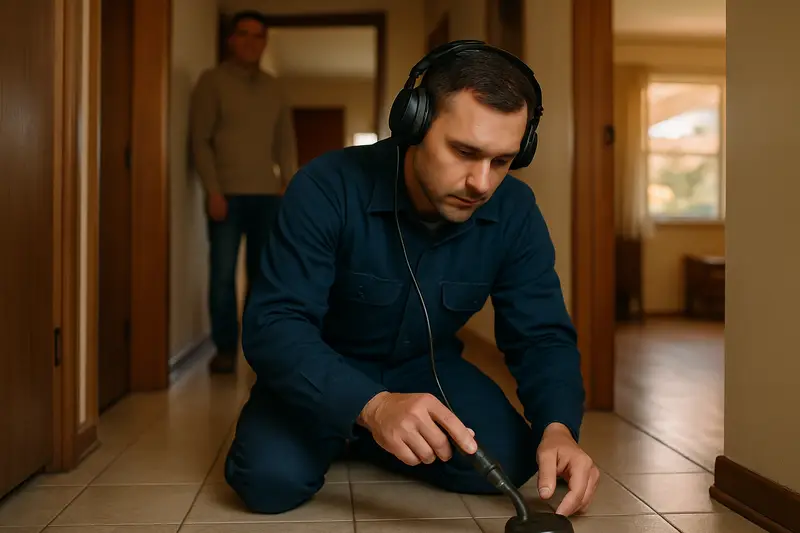
Most locates take one to three hours. You're paying for the time and the equipment (thermal cameras, ground microphones, tracer-gas kits), which can be expensive for the business to own and maintain.
| Type of locate | Typical range |
|---|---|
| Wall or ceiling supply leak | $200–$600 |
| Slab leak (hot or cold side) | $250–$700 |
| Main/yard service line | $200–$600 |
| Pool or spa | $250–$650 |
| Nights, weekends and holidays | $250–$800 |
Repairing it
Drywall, flooring and concrete finishing are often extra and sometimes handled by other trades. Ask what's included, since some quotes stop at the pipe; others include patching the opening.
| Repair | Typical range |
|---|---|
| Pipe repair inside an opened wall | $300–$1,500 |
| Spot repair through a slab | $1,500–$4,500 |
| Reroute a slab line overhead | $2,000–$6,500 |
| Service line spot repair | $800–$2,500 |
| Service line replacement | $2,500–$6,000 |
| Whole-house repipe | $5,000–$16,000 |
What pushes the price up
- Cold-side slab leaks, which are quieter and slower to find than hot-side ones
- Leaks under tile, hardwood or kitchen cabinets, where access costs more to make and restore
- Multiple leaks at once, or a leak that stops and starts
- Two-story homes where the pipe runs between floors
- After-hours call-outs
- Permit fees for reroutes, repipes and water heater replacements
What keeps it down
- Doing the meter, toilet and irrigation checks yourself first (see the high water bill checklist)
- Booking a daytime appointment if the leak is slow
- Shutting off the affected side to limit damage while you wait
- Asking for reroute and spot-repair prices side by side for slab leaks, because the cheaper-looking option isn't always cheaper once flooring is counted
Questions to ask before saying yes
- 1
Is the locating fee credited toward the repair?
Some businesses do this when you hire them for the repair; others don't. Either is fine as long as you know up front.
- 2
What exactly is included?
Opening, pipe repair, pressure test afterwards, patching, clean-up, haul-away, permit: ask which are in the price.
- 3
What's your license number?
Plumbing in California requires a C-36 plumbing license for jobs over the state's minor-work threshold. You can check status on the Contractors State License Board website.
- 4
What does your warranty cover, and for how long?
Warranties are set by each plumbing business. Get the terms in writing.
- 5
Will you document it for my insurer?
Photos of the locate, the opened area and the failed pipe help with a water-damage claim.
Does insurance pay for any of this?
Homeowners policies in California commonly pay for sudden water damage and sometimes for tearing out and replacing the floor or wall to get at the pipe. The pipe repair itself, and long-term seepage, are usually excluded. Detection costs are covered under some policies and not others. The only reliable answer is your policy wording, so call your insurer before the repair if you plan to claim.
Sample costs by situation
| Situation | Locating | Repair, typical range |
|---|---|---|
| Single-story slab home, hot-side leak | $150–$500 | $800–$4,000 depending on approach |
| Raised-foundation home, crawlspace leak | $150–$400 | $250–$900 |
| Two-story home, ceiling stain | $200–$500 | $300–$1,500 plus drywall |
| Service line leak in the yard | $150–$600 | $600–$7,000+ |
| Pool leak | $250–$600 | $200–$3,000+ |
Why prices vary so much
Leak detection pricing depends on how hard the leak is to find. A leak under a carpeted bedroom in a quiet single-story home might take thirty minutes to pinpoint. A leak under tile in a busy house near a freeway, with a pool pump running next door, might take a couple of hours and several tools. Hillside lots, long service lines, multiple buildings on one lot and attached homes all add time. Most companies quote a range on the phone and confirm the final price once they see the house.
The repair is a separate cost. It depends on where the leak is, what the pipe is made of, how much flooring or drywall must be opened and which repair approach you choose.
Hidden costs worth asking about
- After-hours, weekend or holiday rates
- Trip or diagnostic fees if no leak is found
- Permit fees for repipes and main line replacement
- Drywall, paint and flooring repair, often by a different trade
- Water damage drying and mold remediation if the leak ran for a while
Getting value from the visit
- 1
Prepare
Do a meter test, note any warm spots or stains and clear access before the visit.
- 2
Ask questions
Ask how they'll find the leak, how long it might take and what's included.
- 3
Get it in writing
Ask for the findings, the marked location and repair options in writing.
- 4
Compare
For larger repairs, it's reasonable to get a second quote before committing.
When paying for detection saves money
Skipping professional detection can seem like a saving, but guessing at a leak location often costs more. Opening the wrong section of floor or wall means extra repairs, and every hour a leak runs adds to the water bill and the damage. Precise detection keeps the repair small, gives you documentation for insurance and helps you choose the right fix the first time.
Small jobs, big savings
A plumber who finds a running toilet or a stuck irrigation valve during a leak detection visit may save you the full cost of the visit within a single billing cycle.
How costs differ across Orange and Los Angeles counties
Prices don't change much from one city to the next, but the type of house does. In the post-war slab tracts of Anaheim, Norwalk, Westminster and Bellflower, homes are compact and layouts predictable, so a slab leak is often located quickly. In Irvine and other planned communities, attached homes and HOA rules add coordination time. In the hillside neighborhoods of Fullerton, Whittier and Anaheim Hills, long service lines and slopes make outdoor leaks harder to pinpoint. Historic homes in Santa Ana, Orange and Long Beach often have crawlspaces that make leaks easier to reach, offset by decades of mixed plumbing to sort through.
In practice, that means the same leak can cost a little less to find in a simple slab home and a little more on a large hillside lot. A good plumber will explain why before starting.
Paying for repairs over time
Larger repairs such as reroutes, main line replacement and repipes can be a significant expense. Some plumbing companies offer financing through third-party lenders, and some homeowners use a home equity line or a credit card with a promotional rate. Read the terms carefully and compare the total cost. If insurance is likely to cover part of the damage, talk to your insurer before committing to a financing plan so you know what you'll actually owe.
Red flags in a quote
- A price given over the phone for a repair before the leak has been located
- Pressure to sign the same day for a large repipe with no written scope
- No mention of permits for work that normally requires one
- Vague descriptions like 'fix leak' with no location or method
- Unwillingness to provide a license number