Typical range $5,000–$16,000
Repiping after repeat leaks
One leak is bad luck. A second and third in the same house within a few years usually means the pipe itself is wearing out, and fixing leaks one at a time starts costing more than replacing it.
Answered 24/7
Nights, weekends, holidays
Licensed local plumbers
Licensed in California
Pinpoint locating
Acoustic, thermal, tracer gas
Price ranges up front
Know the range before they come
Signs that point here
- Two or more pinhole or slab leaks in the past few years
- Galvanized steel pipe with rusty water or falling pressure
- Green or blue staining on copper pipe and fittings
- Low pressure upstairs or at the far end of the house
- Planning a remodel that will open walls anyway
When repiping beats repairing
Most plumbers suggest thinking about a repipe after the second slab or pinhole leak, and seriously considering it after the third. Each leak repair costs money, often an insurance deductible, and some damage to floors and walls; the underlying pipe keeps ageing. Homes with galvanized steel supply lines, common in houses built before the early 1960s, are candidates even without leaks, because the pipe narrows with rust until pressure drops.
PEX or copper
Both are approved in California. PEX dominates repipes here largely because of cost and speed. Ask the plumber which they recommend for your house and why.
| PEX | Copper (Type L) | |
|---|---|---|
| Cost | Lower: fewer fittings, faster to run | Higher material and labor cost |
| Wall openings | Fewer; flexible pipe snakes through | More; rigid runs need access |
| Hard-water performance | Doesn't scale or pinhole | Can pinhole over decades with aggressive water |
| Sunlight / heat | Must be protected from UV | Unaffected |
| Typical job length | 2–4 days | 3–6 days |
What a repipe looks like
- 1
Plan the route
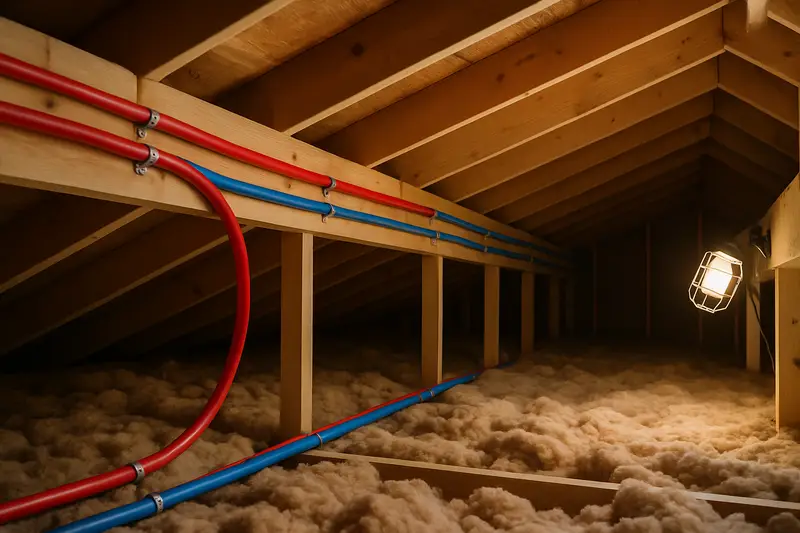
New lines are run overhead through the attic and dropped down inside walls to each fixture, abandoning the buried slab lines entirely.
- 2
Small openings
Expect a series of small openings, usually behind fixtures and in hallway ceilings, rather than whole walls removed.
- 3
Switch-over
Water is typically off for a few hours on each day of work, and back on overnight.
- 4
Inspection and patching
The city inspects the new piping before walls are closed. Patching and paint follow, by the plumber or a separate trade.
What a repipe typically costs
| Home | PEX | Copper |
|---|---|---|
| Condo or small single-story, 1–2 baths | $4,500–$8,000 | $6,500–$11,000 |
| Single-story, 2–3 baths | $6,000–$10,000 | $8,500–$14,000 |
| Two-story, 3–4 baths | $8,000–$14,000 | $11,000–$18,000+ |
| Drywall patch and paint | Often quoted separately | Often quoted separately |
Who repiping is right for
- Homes with original galvanized steel pipes, typically built before the mid-1960s
- Homes with copper that has had two or more slab or pinhole leaks
- Homes with polybutylene supply lines
- Owners planning to stay long-term who want to stop repeat leak repairs
- Homes being remodeled, where walls are already open
Questions to ask before you sign
- 1
What's included?
Confirm whether drywall patching, painting, permits and new shutoff valves are in the price.
- 2
How long will water be off?
Most crews restore water at the end of each working day.
- 3
Where will lines run?
Ask how lines will be routed through the attic, walls or ceilings and where openings will be cut.
- 4
What about the slab?
A repipe usually abandons lines under the slab in favor of overhead routes.
Living through it
Most families stay at home during a repipe. Crews protect floors and furniture, open small sections of drywall where needed, and run the new lines through the attic and walls. Water is typically shut off during the day and restored in the evening. The noisiest, dustiest part is cutting and patching drywall. Planning a few days with clear access to bathrooms, the kitchen and the attic helps the job move quickly.
Once the work is done and inspected, you'll have new supply lines, new shutoff valves under sinks and toilets, and a system that shouldn't need attention for decades.
The meter-side boundary
A good repipe contractor will show you the route on a sketch, explain where each wall opening goes and give you a written schedule before the first day of work.
Selling a home with old pipes
Buyers' inspectors in older Southern California neighborhoods look closely at supply pipe. Visible galvanized or a history of slab leaks can lead to repair requests or a lower offer. Some sellers repipe before listing so the disclosure is simple.
Galvanized homes from the postwar boom
Much of Orange County and southeast Los Angeles County was built in a rush after the Second World War, and many homes from the late 1940s through the early 1960s went up with galvanized steel supply pipe. Galvanized pipe rusts from the inside. Over sixty or seventy years the inside diameter shrinks as scale builds up, so the first symptom is usually weak pressure at the shower or a trickle when two fixtures run at once. Brown or orange water after the house has sat unused overnight is another tell. Eventually threaded joints rust through and start to drip inside walls.
Patching galvanized one leak at a time rarely holds for long, because every joint in the house is the same age. Most plumbers will recommend a repipe once galvanized starts leaking or pressure drops noticeably.
Copper that has started to pinhole
Copper installed from the 1960s onward lasts much longer than galvanized, but in parts of Southern California it develops tiny pinhole leaks after a few decades. Causes vary: water chemistry, high velocity in undersized pipe, poor workmanship at fittings and stray electrical current have all been blamed. Whatever the cause, once pinholes start showing up in exposed pipe under sinks or in the garage, more are usually on the way. If you've had more than one, a repipe stops the cycle instead of chasing each leak.
Permits and inspection
A whole-house repipe normally requires a plumbing permit from your city, and the work is inspected before walls are closed. The plumber usually pulls the permit and schedules inspections. A permitted, inspected repipe is also useful documentation when you sell the house, since buyers and their inspectors often ask about the age and type of supply pipe. Keep the final permit card with your home records.
After the repipe
- Run every faucet and shower for a minute to clear air and any debris from the new lines
- Check under sinks and around toilets for drips in the first few days
- Have drywall patches finished and painted once the inspection is signed off
- Note the new main shutoff and fixture shutoff locations for the whole household
Questions people ask
How long does a whole-house repipe take?+
Two to five working days for most single-family homes, with water back on each evening.
Do I need to move out during a repipe?+
Usually not. Expect daytime water shut-offs and some dust in the rooms being worked on.
Does a repipe need a permit?+
Yes, in every Orange and Los Angeles County city. A licensed plumber pulls the permit and schedules the inspection.
Will a repipe stop slab leaks for good?+
If the new lines run overhead, the old buried lines are disconnected and can't leak, so slab leaks on supply lines stop being a risk.