Los Angeles County · 24/7
Leak Detection in Santa Fe Springs, CA
Santa Fe Springs is best known for its oil field and its industrial parks, but tucked between them are quiet neighborhoods of 1950s homes where about 19,000 residents live. Those homes share the same aging plumbing as their neighbors in Whittier and Norwalk.
Answered 24/7
Nights, weekends, holidays
Licensed local plumbers
Licensed in California
Pinpoint locating
Acoustic, thermal, tracer gas
Price ranges up front
Know the range before they come
Houses and pipes in Santa Fe Springs
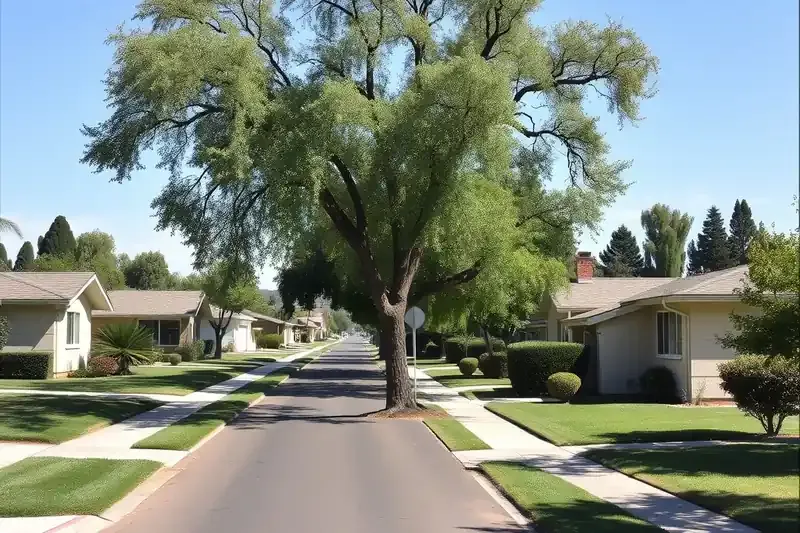
Residential Santa Fe Springs is concentrated in a few pockets, mostly single-story ranch homes built in the 1950s and early 1960s on concrete slabs with copper supply lines. A few neighborhoods have older homes on raised floors, and there are some newer townhome communities and apartments near the main boulevards.
The City of Santa Fe Springs runs its own water utility, buying water from outside suppliers and handling the meters and street mains. The pipe from the meter to the house belongs to the homeowner.
Santa Fe Springs leak patterns
The common call is a hot-side slab leak in a 1950s ranch home, found as a warm floor, a hissing sound or a meter that won't stop. Townhomes and apartments see ceiling leaks from upstairs bathrooms, and older lots see buried water line leaks between the meter and the house.
Typical leak costs in Santa Fe Springs
| Job | Typical range |
|---|---|
| Slab leak locating, Santa Fe Springs ranch home | $250–$600 |
| Tracing a yard line from the meter | $200–$500 |
| Tracing a townhome ceiling leak | $200–$600 |
| Rerouting one slab line | $1,500–$4,500 |
| Whole-house repipe, 1950s home | $5,500–$12,000 |
Neighborhoods among the industry
Santa Fe Springs has more jobs than residents, and most of its land is industrial. Its homes are grouped into a handful of neighborhoods, many built in the 1950s and early 1960s near Little Lake Park, Lakeview and the blocks along Norwalk Boulevard and Pioneer Boulevard. Because the neighborhoods are compact and built in the same era, their plumbing problems tend to be the same: copper supply lines under slabs that have been in service for more than sixty years.
The oil field's legacy
The Santa Fe Springs oil field, discovered in 1921, was one of the most productive in the country, and the city's Heritage Park still shows an old derrick. The field doesn't affect household plumbing directly, but it did shape where homes could be built, which is why residential streets are tucked between industrial areas. Some homes sit near old well sites that were capped decades ago, and none of that changes how a slab leak is found.
City water utility
Santa Fe Springs runs its own water utility, buying water from outside suppliers and maintaining the meters and street mains. If water is pooling at the meter or bubbling in the street, call City Water Services. If the meter is dry but still turning with everything off, the leak is on your side.
Warm floors and slab leaks
In a 1950s Santa Fe Springs ranch home, the classic slab leak shows up as a warm patch of floor somewhere between the water heater and the kitchen or a bathroom. Some owners hear it as a faint hiss in a quiet room at night. A meter test confirms water is escaping; acoustic listening and thermal imaging pinpoint where.
Townhomes and apartments
Newer townhome communities in Santa Fe Springs bring a different leak: water from an upstairs shower, toilet or washer that shows up as a stain in the ceiling below. These leaks travel along joists before they show, so the stain may not be under the source. A plumber can trace it with moisture readings and a thermal camera before opening anything.
Hard water and heaters
Water in Santa Fe Springs is hard enough to leave a layer of sediment in every tank water heater. That sediment makes the tank work harder and eventually rust through at the bottom. Flushing the tank once a year and checking the relief valve for drips keeps it going longer.
Reroute or repipe
For a single slab leak in an otherwise sound home, rerouting the line through the attic is often simplest. If the house has had more than one leak, a full repipe is usually the better value over time.
Long front yards and service lines
Some Santa Fe Springs lots have deep front setbacks, so the line from the meter to the house runs a good distance under lawn and driveway. A soft or unusually green strip in summer can mark a leak along that path. Tracer gas or acoustic listening finds the spot without digging up the whole yard.
What to tell the plumber
Mention whether you're in a ranch home or a townhome, how old the house is and what you've noticed. If you've already done a meter test, share the result.
Ranch homes around Little Lake Park
The streets near Little Lake Park, close to the Norwalk line, are among the oldest residential blocks in Santa Fe Springs. Their single-story homes sit on slabs with copper that has seen more than six decades of hard water. Owners there tend to notice slab leaks first in winter, when a warm patch of tile stands out against a cold floor. If you find one, lay a hand on it in the early morning before the heater has run for showers: a spot that is warm even then is almost always a hot-side leak, not sun or a heat register.
When the meter test is unclear
Some Santa Fe Springs homes have a pressure regulator, a water softener or an irrigation controller that can make the meter twitch even with every fixture off. Turn the softener to bypass and the controller off before the test, and give the system a few minutes to settle. If the meter still creeps, close the house shutoff. A dial that stops then means the leak is inside the house; one that keeps moving means it's in the yard line between the meter and the house.
Earthquake straps and heater closets
California requires water heaters to be strapped against earthquakes, and in older Santa Fe Springs homes the tank often lives in a small closet off the garage or the service porch. A tank that has shifted against its straps can stress the water connections at the top. Look for green or white crust at those fittings, or a small rust stain on the closet floor, every few months. Catching a drip at the fitting costs little to fix; letting it rot the closet floor costs much more.
Buying a home in Santa Fe Springs
With only a few residential neighborhoods, homes in Santa Fe Springs don't come up for sale often, and buyers sometimes rush inspections. Ask the inspector to note whether the original copper has been rerouted or replaced, whether the water heater is strapped, and to do a meter test. A slab leak found during escrow is a negotiating point; one found after you move in is your bill.
Worth a call if you notice
- A warm spot on the floor near the water heater closet
- A meter dial creeping with every tap shut
- Damp carpet along a wall with no plumbing fixture
- A ceiling stain under a townhome bathroom
- A city water bill much higher than usual
Santa Fe Springs leak questions
Who maintains the water meter at my Santa Fe Springs home?+
The city's water utility. If water is leaking at the meter box or the street, call the city; anything on the house side is yours.
Does living near the oil field affect my plumbing?+
Not directly. What matters most for your pipes is their age and the hard water they carry, not the nearby wells.
Should a Santa Fe Springs slab leak be fixed through the floor or rerouted?+
In many single-story Santa Fe Springs homes, rerouting wins. A new line through the attic avoids tearing up floors.
Can a leak make my water heater run constantly?+
Yes. A leak on the hot side means the heater keeps refilling and reheating, which you may hear as the burner cycling at odd hours.