Typical range $250–$650
Pool & spa leaks
Every pool loses some water to evaporation, and in an Orange County summer that can be a quarter of an inch a day. A pool that drops faster than that, or keeps dropping when the weather cools, is usually leaking.
Answered 24/7
Nights, weekends, holidays
Licensed local plumbers
Licensed in California
Pinpoint locating
Acoustic, thermal, tracer gas
Price ranges up front
Know the range before they come
Signs that point here
- Water level dropping more than about ¼ inch a day
- The autofill running constantly or the water bill climbing in summer
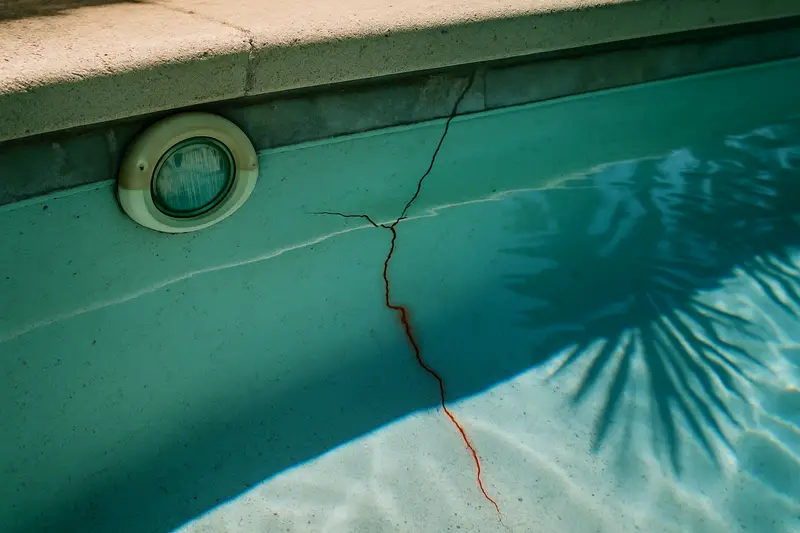
- Cracks in the plaster or tile line, or loose tiles
- Wet soil or standing water near the pool equipment
- Algae that keeps coming back because fresh water dilutes the chemicals
First, the bucket test
- 1
Set it up
Put a bucket on the first or second pool step and fill it so the water inside matches the pool level. Mark both levels, inside the bucket and on the outside.
- 2
Leave it for 24 hours
Turn off the autofill. Run the pump on its normal schedule.
- 3
Compare
Evaporation drops both levels equally. If the pool level falls noticeably more than the bucket, the pool is leaking.
- 4
Repeat with the pump off
If the pool loses more with the pump running, the leak is likely in the pressure-side plumbing; more with it off points to the suction side or the shell.
Where pool leaks usually are
- Around light niches, skimmer throats and return fittings, where the plaster meets a different material
- Underground plumbing lines between the pool and the equipment pad
- At the equipment pad itself: pump seals, filter O-rings, heater connections
- Cracks in the shell, more common in older pools and on expansive clay
- Spa spillways and the joint between spa and pool
How specialists find them
Detection starts with a pressure test of each plumbing line to see which one won't hold. A diver or a technician on the steps then puts a few drops of dye next to each fitting and crack; a leak pulls the dye in. Underground lines are pinpointed with hydrophones, microphones that work underwater and through soil, so only a small patch of deck has to be cut.
Pool leak detection is a specialty. Some plumbing businesses do it themselves; others refer it to a pool-leak specialist. When you call, say it's a pool so you're matched correctly.
What pool leak work typically costs
| Job | Typical range |
|---|---|
| Leak detection for a residential pool | $250–$600 |
| Pool and spa together | $350–$800 |
| Repair a skimmer or return fitting | $200–$800 |
| Repair underground plumbing line | $800–$3,000+ |
| Light niche or shell crack repair | $200–$1,500 |
Evaporation in Southern California
Pools here lose water to evaporation every day, and on hot, dry, windy days in summer or during Santa Ana winds, the loss can be noticeable. A quarter inch a day is common in summer; more during heat waves. That's why the bucket test is important. If the pool is dropping noticeably faster than a bucket of pool water sitting on the step, there's likely a leak rather than just evaporation.
An autofill can hide a leak for months by quietly topping the pool up. If your water bill has risen and you have an autofill, turn it off for a few days and watch the level.
Narrowing it down yourself
- 1
Pump on vs pump off
Measure the drop over 24 hours with the pump running, then 24 hours with it off. A bigger loss with the pump on points to the pressure side plumbing.
- 2
Watch the level
If the water stops dropping at a particular level, the leak may be at that height, such as the skimmer or a light.
- 3
Look at the equipment
Check the pump, filter and valves for drips or damp ground.
- 4
Check the yard
Soggy areas or sinking pavers between the pool and equipment can point to an underground line.
Repairs and the house
A pool leak near the house can saturate soil next to the foundation. That's worth addressing promptly, especially on hillside lots or where expansive clay soils are common. Once the leak is located, many repairs, like resealing a fitting or patching a crack, can be done without draining the pool, sometimes by a diver. Line repairs under decking may require cutting and replacing a section of concrete or pavers.
When a drop is urgent
Treat a sudden drop of an inch or more in a single day as urgent. Turn off the autofill and call, since water lost that fast may be soaking the ground under the deck or near the house.
Seasonal timing
Spring is a good time to test for leaks, before summer evaporation makes the numbers harder to read and before the pool sees heavy use. If you notice the level dropping in winter, when evaporation is low, it's a stronger sign of a leak than the same drop in August. Keeping a simple log of the water level, the weather and how often the autofill runs makes it much easier for a specialist to pin down the problem.
Spa leaks and attached spas
Many Southern California pools have an attached spa that spills over into the pool. Leaks in the spa can be harder to spot because the water level in both bodies is linked. A common sign is a spa that drains down into the pool when the pump is off, which can mean a problem with the spillway, a valve or the plumbing between them. Leak specialists test the spa and pool separately to see where the loss is happening. Spa jets, lights and the plumbing to the equipment pad are frequent culprits.
What happens on a leak detection visit
- 1
Visual inspection
The technician checks the shell, tile line, fittings, lights and equipment for obvious problems.
- 2
Dye testing
Colored dye is released near suspected spots to see whether it's drawn into a crack or fitting.
- 3
Pressure testing
Each plumbing line is isolated and pressurized to find the one losing water.
- 4
Electronic listening
Underwater and ground microphones locate leaks in the shell and buried lines.
Who to call
Pool leak detection is a specialty. Some plumbers handle it, and many pool service companies work with dedicated leak specialists. If the leak turns out to be in the house's own plumbing, such as the line feeding an autofill, a plumber can repair it. Repairs to the pool shell, tile and pool equipment are usually handled by pool contractors.
Questions people ask
How much water loss is normal for a pool?+
Around a quarter inch a day in hot, dry, windy weather is typical evaporation in Southern California. Much more than that, especially in mild weather, suggests a leak.
Can a pool leak damage the house?+
A leak near the house can saturate soil against the foundation. Leaks under the deck can also wash out the base and cause settling.
Do I have to drain the pool for repairs?+
Most leak repairs (fittings, lights, small cracks) are done underwater with epoxy or putty. Draining is mainly for resurfacing or major shell repairs.