Orange County · 24/7
Leak Detection in Irvine, CA
Irvine's housing runs from the first 1970s villages to tracts finished last year, and the leaks follow the age of the pipe. In the older villages that usually means copper under a slab; in newer ones, a fitting or a fixture.
Answered 24/7
Nights, weekends, holidays
Licensed local plumbers
Licensed in California
Pinpoint locating
Acoustic, thermal, tracer gas
Price ranges up front
Know the range before they come
Houses and pipes in Irvine
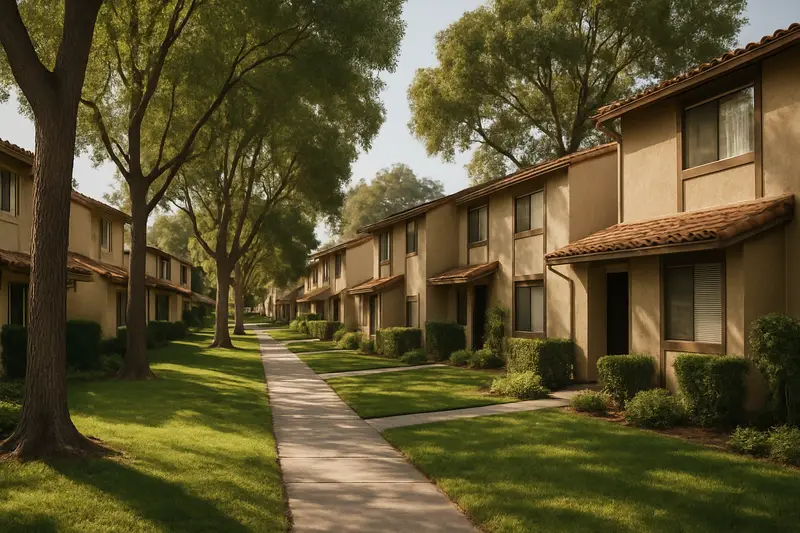
Irvine was built as a master-planned city on the old Irvine Ranch, one village at a time. University Park, Turtle Rock and the early Northwood and Woodbridge neighborhoods went up from the 1970s into the 1980s, mostly as slab-on-grade homes and townhomes with copper supply lines, some of them now 45 to 50 years old. Later villages like Westpark, Quail Hill and the Great Park neighborhoods were built with newer materials, often PEX.
A large share of Irvine homes are attached: townhomes and condos that share walls and sometimes plumbing stacks. A leak in one unit can show up in the neighbor's ceiling first, and the HOA's master policy and CC&Rs decide who pays for which part. If you're in an association, tell the plumber, and check whether the HOA wants its own vendor involved.
The leaks Irvine homes tend to get
In the 1970s and early-1980s villages, the typical call is a hot-water slab leak: a warm patch in a hallway or kitchen, a water heater that keeps firing, a meter that won't stop. That copper has been carrying hard imported water for decades, and reroutes through the attic are a common fix here because many of these homes have tile or engineered-wood floors owners don't want broken up.
Newer homes leak less at the pipe and more at connections: a crimp fitting on PEX, a supply hose behind the washer, a shower valve in an upstairs bath. Those leaks usually show up on a ceiling below rather than on the bill.
Irvine Ranch Water District bills against a water budget based on household size and landscape area, so a hidden leak pushes you into the higher-priced tiers quickly. If your IRWD bill jumped, it's worth checking the meter the same day.
Typical Irvine leak costs
| Job | Typical range |
|---|---|
| Leak detection, detached home | $200–$600 |
| Leak detection, townhome or condo | $200–$500 |
| Slab leak spot repair under tile | $2,000–$4,500 plus flooring |
| Attic reroute | $1,000–$3,800 |
| Whole-house repipe, two-story | $8,000–$16,000+ |
Village by village
The oldest Irvine villages, including University Park, Turtle Rock, Culverdale, the Ranch and early Woodbridge and Northwood, have homes and townhomes from the 1970s and early 1980s, mostly on slabs with copper under the floor. These are the homes where slab leaks are most common, and where owners are increasingly choosing reroutes or repipes after the first leak. Many also have their original water heaters replaced several times, often in garages or interior closets.
Villages from the 1990s and 2000s, such as Westpark, Northpark and Quail Hill, have newer copper or early PEX and see fewer slab leaks. The most recent neighborhoods, around Portola Springs and the Great Park, are largely PEX with manifold systems. In these homes, leaks are more likely at fittings, fixtures and appliance connections than in the pipe itself.
Working with your HOA
- 1
Notify early
Tell the management company as soon as you suspect a leak, especially in attached homes.
- 2
Check the CC&Rs
They define which pipes are yours and which belong to the association.
- 3
Ask about vendors
Some associations require their own plumber for common-area work or access.
- 4
Coordinate access
If the leak may be in a shared wall or a neighbor's unit, arrange access through the HOA.
Upstairs bathrooms and ceilings
In two-story Irvine homes and townhomes, many leak calls begin with a ceiling stain below an upstairs bathroom. Shower pans, valves, toilet seals and supply lines are common sources. Testing fixtures one at a time while watching the stain usually identifies the culprit. Small, neat access cuts in the ceiling allow the repair, and drywall patching follows once things are dry. Acting quickly limits damage to the ceiling and anything below.
Know your shutoffs
Townhome and condo owners should know where their unit's main shutoff is, since it may be in a closet, garage or utility area rather than outside.
Water budgets and leak detection
IRWD's budget-based billing sets a water allocation for each household based on factors like the number of residents and the size of the irrigated landscape. Usage within the budget is billed at lower rates, while usage above it moves into higher tiers. A hidden leak, even a modest one, can push a household over its budget and raise the bill noticeably. Because of that, many Irvine homeowners spot leaks sooner than in cities with flat pricing, simply because the bill jumps more.
If your usage suddenly exceeds your budget and nothing has changed at home, check toilets first, then irrigation, then do a meter test with the house quiet. If the meter still moves, schedule leak detection.
Recycled water and irrigation lines
Many Irvine neighborhoods use recycled water for common-area landscaping, and some homes and HOAs have separate irrigation systems. If you notice soggy turf or water running along a curb from a common area, it may be an HOA irrigation issue rather than a leak on your service. Report it to the association. If the wet area is on your own lot and the meter keeps moving with the house valve shut, the problem is likely in your own service line or irrigation.
Repiping attached homes
Repiping a townhome or condo takes more coordination than a detached house. Shared walls and ceilings may limit where new lines can run, and the HOA may need to approve the work, schedule access to common areas or require certain contractors. The upside is that a repipe can end years of slab and pinhole leaks for good. Ask for a plan showing where lines will run and which walls and ceilings will be opened, and share it with the HOA before work begins.
Worth a call if you notice
- A hallway or bathroom floor that's warm under bare feet
- An IRWD bill well outside your water budget with no change at home
- A stain on the downstairs ceiling below an upstairs shower
- A neighbor in your building reporting water in their wall or ceiling
- The low-flow dial on the meter turning with every fixture off
Irvine leak questions
Who pays for a leak in an Irvine townhome or condo?+
It depends on your HOA's CC&Rs: often the owner covers pipes serving only their unit and the association covers common lines. Check the CC&Rs and call the management company before work starts.
Does IRWD give credits for leaks?+
IRWD has offered leak-related bill adjustments for customers who repair promptly. Call IRWD customer service with the repair invoice to ask what currently applies.
My Irvine home is from the 1970s. Should I repipe?+
Not automatically. One slab leak can be fixed with a reroute. If you've had two or more, or copper elsewhere is pinholing, get a repipe price to compare.