Irvine · $250–$700
Slab leak detection in Irvine
Most slab leaks in Irvine come from the first generation of villages: homes built in the 1970s and early 1980s with copper laid under the slab. Newer villages see far fewer.
Answered 24/7
Nights, weekends, holidays
Licensed local plumbers
Licensed in California
Pinpoint locating
Acoustic, thermal, tracer gas
Price ranges up front
Know the range before they come
Which Irvine homes are most at risk
University Park, Turtle Rock, Culverdale, the Ranch, and the early sections of Woodbridge and Northwood are where Irvine slab leak calls cluster. These homes are now 40 to 50 years old, and their hot-water lines have carried decades of hard water through copper pressed against concrete. Many Irvine townhomes from the same period share the pattern, with the added twist that the leaking line may serve more than one unit.
Homes in Westpark, Quail Hill, Woodbury, Portola Springs and the Great Park neighborhoods were built later and often plumbed with PEX or with lines run overhead. Slab leaks there are uncommon; leaks tend to be at fittings or fixtures instead.
Why reroutes are popular here
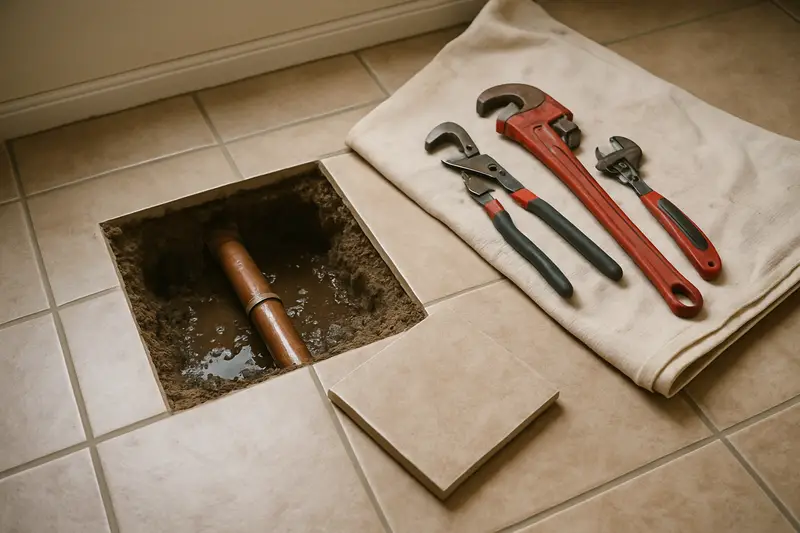
A lot of Irvine homes have porcelain tile, stone or engineered wood throughout the ground floor, often installed during a remodel. Breaking a two-foot square through that floor, then matching the tile, can cost as much as the plumbing. Rerouting the leaking line through the attic and down inside a wall leaves the floor alone and retires the buried pipe at the same time.
Two-story homes complicate the route because the new line has to reach ground-floor fixtures without an attic directly above them. Plumbers usually solve this through closets, the garage ceiling or a soffit. Ask to see the proposed route before agreeing.
HOA and attached homes
In condos and townhomes, check the CC&Rs before work starts. Many Irvine associations require notice for any work that opens common walls or slabs, and some insist on their own vendor for anything outside your unit's interior. If the leak turns out to be on a line serving several units, the association may be responsible.
Your water budget
IRWD's budget-based rates mean a slab leak pushes usage into the higher tiers quickly. Turning off the water heater's cold inlet stops a hot-side leak immediately while you wait for an appointment, and keeps the next bill from climbing further.
What the visit looks like in a 1970s Irvine home
Expect the plumber to start at the water heater, usually in the garage, and split the system there. In many early-village plans the hot line runs from the garage under the kitchen and then down a central hallway to the bathrooms, so the thermal camera tends to be pointed there first. In townhomes, the plumber may also need access to the shared garage or the unit's water shut-off, which is sometimes in a common utility closet controlled by the association.
Once the leak is marked, ask for a sketch or photo of the marked spot and the proposed reroute path. If you file an insurance claim, the adjuster will usually want that, and so will the HOA if common walls are involved. Most single-line reroutes in these homes finish in a day, with water back on by evening.
Irvine slab leak costs
| Step | Typical range |
|---|---|
| Locating in a detached home | $200–$600 |
| Locating in a townhome or condo | $200–$500 |
| Spot repair under tile or engineered wood | $2,000–$4,500 plus flooring |
| Overhead reroute | $1,000–$3,800 |
Engineered wood and stone floors
Irvine homes, especially those that have been updated, often have engineered wood, stone or large-format tile floors. These materials are expensive and hard to patch invisibly, which makes breaking through the slab unattractive. For that reason, reroutes are the default recommendation for many Irvine slab leaks. The new line runs through the attic or walls, leaving the floor untouched.
If you do choose a spot repair, ask whether spare flooring from the original installation is available. Some owners keep extra boxes in the garage, which makes a patch much easier to match.
Attached homes and the slab
In townhomes and condos, the slab may be shared, and lines can run beneath a neighbor's unit. Before any slab is opened, confirm with the HOA who owns the line and who is responsible for repair and floor restoration. The CC&Rs usually spell this out, but management companies can help interpret them.
First steps
- 1
Meter test
Use the meter or your IRWD account to check for continuous use.
- 2
Hot side test
Close the cold inlet at the water heater and watch for flow.
- 3
Notify the HOA
If you're in an attached home, let management know right away.
Older villages and original copper
In Irvine's earliest villages, many homes still have original copper under the slab, now several decades old. These are the homes where slab leaks are most common. If your home is in one of these villages and has had one slab leak, it's worth asking about the condition of the rest of the copper. A reroute of the hot side, or a full repipe, may make sense to avoid repeated leaks.
Signs Irvine owners notice
- A warm patch on tile or wood floors
- IRWD usage over budget without explanation
- A water heater that runs more than usual
- The sound of running water at night
Water heater location matters
In many Irvine homes, the water heater is in the garage or a closet. Knowing where it is helps the plumber trace the hot line quickly.
Reroute routing in Irvine homes
In single-story Irvine homes, rerouted lines usually run up from the water heater into the attic and drop down inside interior walls to each fixture. In two-story homes and townhomes, the route may run through closets, chases or soffits to reach upstairs bathrooms. A good plumber will walk you through the route before starting, show you where drywall will be opened and explain how patches will be finished. Ask whether drywall repair and painting are included or handled separately.
Many Irvine HOAs have rules about work hours, parking for contractors and noise. Share these with the plumber when you schedule.
Moisture under engineered wood
Engineered wood floors in Irvine homes can cup or swell when moisture rises from below. If boards start to lift at the edges near a hallway or bathroom, it may be the first sign of a slab leak rather than a flooring defect. Ask the plumber to test before the flooring installer replaces anything, so the cause is fixed before new boards go down.
Questions people ask
How long does a slab leak reroute take in an Irvine home?+
For a single line in a single-story home, often one day. Two-story homes and multi-line reroutes can take two.
Will my HOA pay for a slab leak?+
Only if the line is a common element under your CC&Rs. Lines serving just your unit are usually the owner's responsibility.
Are newer Irvine homes at risk of slab leaks?+
Much less so. Many newer homes use PEX or overhead routing, so leaks there are more often at fittings and fixtures.