Los Angeles County · 24/7
Leak Detection in Maywood, CA
Maywood covers barely more than a square mile along the Los Angeles River, between Bell, Vernon, Commerce and Huntington Park, and it is one of the most densely populated cities in the country. Incorporated in 1924, it is almost entirely small houses, back units and apartments on narrow lots.
Answered 24/7
Nights, weekends, holidays
Licensed local plumbers
Licensed in California
Pinpoint locating
Acoustic, thermal, tracer gas
Price ranges up front
Know the range before they come
Houses and pipes in Maywood
Most Maywood homes are small houses from the 1920s through the 1940s, many on raised wood floors with galvanized supply pipe that has been only partly replaced. A typical lot has a front house and one or two units behind it, often added over the years, and many of those back units are fed by branch lines buried under the yard or driveway. Apartment buildings from the 1950s and 1960s fill in along the main streets.
Maywood is unusual in that three separate mutual water companies supply most of the city. Each owns its meters and street-side pipe; the line from the meter onto the lot is the owner's.
Maywood leak patterns
Old galvanized pipe under raised floors and buried branch lines to back units cause most Maywood leaks. Because several households often share one meter, a hidden leak in one unit can run for months before anyone sees it on the bill. Later homes and apartments add the usual slab leaks in aging copper.
Typical leak costs in Maywood
| Job | Typical range |
|---|---|
| Finding a leak under a raised-floor Maywood house | $150–$450 |
| Tracing a buried branch line to a back unit | $200–$550 |
| Cutting out and replacing a rusted galvanized section | $300–$1,200 |
| Slab leak detection in a later Maywood home | $250–$600 |
| Whole-house repipe, small 1920s–1940s home | $5,000–$11,000 |
A square mile of small lots
Maywood was laid out in the 1910s and 1920s as a working suburb for the factories of Vernon and the rail yards along the river, and it filled up fast. Lots are narrow and deep, and over the decades most of them gained a second or third dwelling behind the front house. That density matters for leaks. Pipes on a Maywood lot often run under paving, under a neighbor's fence line or under a structure that was added later, and the only map is usually the memory of whoever built it.
Three mutual water companies
Instead of a city utility, most of Maywood gets its water from three mutual water companies, small nonprofit systems owned by their customers that pump local groundwater. Each owns its own meters and mains. California has encouraged the Maywood mutuals to work together, and the state and the Water Replenishment District have funded treatment work on some of their wells. For a leak, what matters is simple: the company on your bill owns the meter and the pipe on the street side, and the owner is responsible for everything past it.
Galvanized pipe in Maywood's older homes
Houses built here in the 1920s through the 1940s were plumbed with galvanized steel, and many still have some of it under the floor. Galvanized rusts from the inside, so the first signs are rust-colored water in the morning and weak flow at one faucet. Eventually a threaded joint gives way. Under a raised floor that leak may drip into the soil for months. If you can, open the crawlspace hatch with a flashlight and look for damp soil, rust trails or white crust on fittings.
Back units and buried branch lines
Many Maywood back units get water through a line that runs underground from the front house or straight from the meter. These lines are often shallow and were sometimes installed without a permit or a drawing. When the ground between the buildings stays soft, or a crack in the driveway always looks damp, that line is the first suspect. Acoustic listening and tracer gas can find the break without tearing up the whole yard.
Shared meters and how to narrow it down
With two or three households on one meter, nobody notices a bill creeping up until it is large. The shutoff test helps: with all water off, close each unit's valve one at a time and watch the meter's leak indicator. When it stops, the leak is on that branch. Telling the plumber which branch it is saves search time.
Near the river
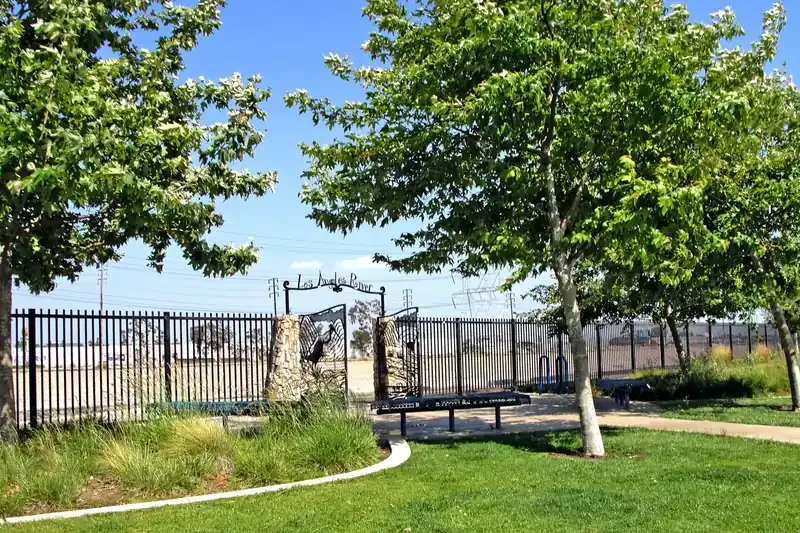
Maywood's eastern edge runs along the Los Angeles River, now with Maywood Riverfront Park beside it. The ground near the river channel is sandy and drains quickly, which means a leak there may not puddle at all. The water simply disappears into the soil. In that case, the meter test and the bill are often the only clues.
Repair or repipe in Maywood
If a Maywood house has had several galvanized leaks or the water is always rusty, replacing the supply pipe is usually the smarter investment. Small one-story houses repipe quickly, often in two or three days. When the house has one leak and is otherwise in good shape, a spot repair or a short reroute is reasonable.
Renters in Maywood
Most Maywood homes are rented. If you rent and see a leak, tell the owner or manager in writing right away, and shut off the fixture or the unit's valve if water is spreading. Take photos. The owner is responsible for arranging the repair.
What to tell the plumber about a Maywood home
Say whether the house is on a raised floor or a slab, how many units share the meter, whether the water is rusty and where you see dampness. If closing one Maywood unit's valve made the meter stop, tell the plumber which one.
Maywood houses with additions
Many Maywood houses have grown over the years with added bedrooms, a second bathroom or an enclosed porch. Each addition meant new pipe spliced into old, sometimes through an exterior wall or under the original floor. Those splices are a common leak point, especially where galvanized meets copper and the two metals corrode each other. If the dampness is near where the old house meets the new part, say so when you call.
Slauson Avenue and the apartment blocks
Along Slauson and Atlantic Avenues and other main streets, Maywood has apartment buildings from the 1950s and 1960s. In those buildings, bathrooms and kitchens are often stacked, so a leak upstairs becomes a ceiling stain downstairs. Owners should keep a list of each unit's shutoff location; tenants should report stains early, since a small stain usually means a much smaller repair.
Worth a call if you notice
- Rust-colored water from the tap first thing in the morning
- A soft, wet patch of yard between the front house and a back unit
- Weak pressure in a back unit when the front house runs water
- Damp soil or a musty smell under a raised floor
- A water bill that keeps rising on a lot with several units
Maywood leak questions
Who supplies water in Maywood?+
Most of the city is served by one of three Maywood mutual water companies. Your bill names yours; it owns the meter and the street side.
Why is my Maywood tap water brown or rusty?+
In older homes, rust from galvanized pipe inside the house is a common cause. Maywood's water companies have also worked on manganese in some wells, so ask yours if the whole street is affected.
How do I find which unit on my lot has the leak?+
Close each unit's shutoff valve one at a time and watch the meter. When it stops moving, you have found the branch with the leak.
Should I repipe an old Maywood house?+
If it still has much of its original galvanized pipe and leaks keep coming, a repipe is usually cheaper over time than repeated spot repairs.