Riverside County · 24/7
Leak Detection in Corona, CA
Corona sits where the 91 and the 15 meet, below the Santa Ana Mountains. A small citrus town for most of its history, it grew into a city of tract homes from the 1980s on, and most of its plumbing is now thirty to forty years old.
Answered 24/7
Nights, weekends, holidays
Licensed local plumbers
Licensed in California
Pinpoint locating
Acoustic, thermal, tracer gas
Price ranges up front
Know the range before they come
Houses and pipes in Corona
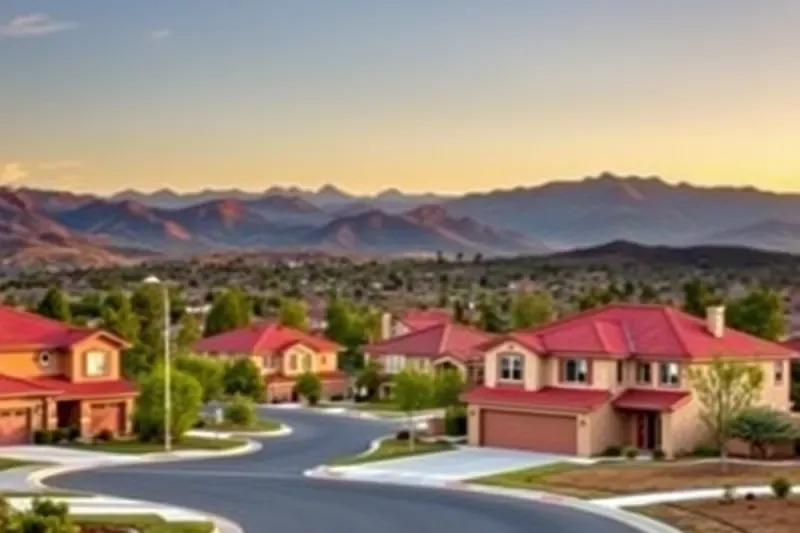
The original town inside Grand Boulevard, the circular street that gives Corona its 'Circle City' nickname, has homes from the early and mid-1900s. Most of the city is two-story stucco tract housing from the 1980s through the 2000s on slab foundations, south toward Temescal Valley and west into the hills.
The city's utilities department supplies water to most homes, and some newer areas are served by other districts. Check your bill to see which.
Corona leak patterns
Tract homes from the 1980s and 1990s are now at the age where copper under the slab starts to fail, especially on the hot side. Homes on hillside lots see main line leaks as soil shifts, and hard water shortens the life of water heaters and fixtures.
Typical leak costs in Corona
| Job | Typical range |
|---|---|
| Locating a slab leak in a tract home | $150–$500 |
| Spot repair through a tiled slab | $1,800–$4,500 plus flooring |
| Reroute through walls and attic in a two-story | $1,200–$4,000 |
| Main line leak on a hillside lot | $800–$3,500 |
| Water heater replacement | $1,500–$3,800 |
A tract-home city reaching middle age
Most of Corona was built in a rush between the mid-1980s and the 2000s, as the 91 freeway made it a commuter suburb for Orange County. Subdivision after subdivision went up south of the old town and into the hills toward the Cleveland National Forest, mostly two-story stucco homes on concrete slabs. Copper supply lines under those slabs are now thirty to forty years old, and that's the age when they start to fail. A leak detection call in Corona often comes from someone whose house has never had a plumbing problem until suddenly the floor is warm or the meter won't stop.
The Circle City's older core
Inside Grand Boulevard, the three-mile circle at the center of town, the homes are older, some from the early 1900s and many from the mid-century. These houses may have galvanized pipe, older copper or a mix of both after decades of repairs. Rusty water, weak pressure and leaks at threaded fittings are common. Because they were built before the tract era, their layouts are less predictable, and a careful leak search matters more.
Two-story homes and ceiling leaks
In a two-story Corona home, bathrooms and laundry rooms upstairs sit above living space. A slow leak at a toilet supply, shower valve or washing machine hose can soak the subfloor and run along joists before showing up as a stain on a first-floor ceiling, sometimes several feet from the source. Thermal imaging and moisture meters trace the water back to where it starts, so only one small section of ceiling has to be opened.
Rerouting instead of breaking tile
Many Corona homes have large areas of tile on the ground floor, and breaking it to reach a slab leak means matching tile that may no longer be made. That's why reroutes are popular here. A plumber abandons the leaking line under the slab and runs a new one through walls and the attic, with small access holes that are easy to patch. In a two-story home the route can be longer, but it still usually costs less than tearing up and replacing a tiled floor.
Hillside lots and main lines
Homes on the slopes toward the Santa Ana Mountains and in hillside neighborhoods sit on soil that moves a little over the years. Main water lines from the meter to the house can crack where the slope settles. Wet soil, a soggy patch on a slope or water seeping from a retaining wall are common signs. A plumber can trace the line and use acoustic equipment to pinpoint the break before digging.
Hard water and fixtures
Corona's water, like much of the inland region, is hard. Mineral scale builds up in water heaters, valves and fixtures, and it can make fittings fail sooner. Many homeowners install softeners. If yours has one, its connections and drain line are worth checking when you're hunting for a leak, since a softener valve can leak into a garage wall.
When the meter won't stop
One of the simplest tests is to turn off every faucet and appliance and watch the meter. If the dial or leak indicator keeps moving, water is going somewhere. Corona's tract homes usually have the meter at the curb near the driveway, and the main shutoff on an outside wall or in the garage. Knowing where both are helps in any emergency.
Before you call about a Corona leak
Mention roughly when the house was built, whether it's single or two-story, what you're seeing and whether the meter moves with everything off. If the floor is warm, note where. If there's a ceiling stain, note what room is above it.
Costs in Corona
Locating usually falls in the range above. The bigger cost differences come from the fix: a spot repair under carpet costs much less than one under tile, and a reroute in a single-story home costs less than one in a two-story. If your home is from the late 1980s and has had one slab leak, it's worth getting a repipe price alongside the repair.
A note on Corona's water
Hard water in Corona leaves white crust on faucets and showerheads, and the same minerals settle inside valves and heaters. If a fixture drips no matter how hard you close it, scale on the cartridge is the usual reason, and it's a quick swap.
Temescal Valley and the newest tracts
South along the 15, Temescal Valley and the newest neighborhoods were built in the 2000s and later, and many of those homes use PEX instead of copper. Pipe failures there are rare. When a leak shows up, it's usually at a fitting under a sink, a washing machine connection, a water heater or an irrigation valve. A moisture meter and a short meter test usually find it quickly, and the repair is small.
Worth a call if you notice
- A warm hallway floor in a 1990s tract home
- A meter that keeps turning with every tap off
- Water stains on a first-floor ceiling under a bathroom
- A water heater dripping or rusting at the base
- Damp soil on a hillside lot below the house
Corona leak questions
My Corona home is from the 1990s. Is that old enough for slab leaks?+
Yes. Copper under slabs often starts leaking after 25 to 35 years, sooner with hard water.
Can a leak in a two-story home show up downstairs?+
Often. Water from an upstairs bathroom travels and stains the ceiling below.
Who supplies water in Corona?+
Mostly the city's utilities department; some areas use other providers. Your bill names yours.