Los Angeles County · 24/7
Leak Detection in Artesia, CA
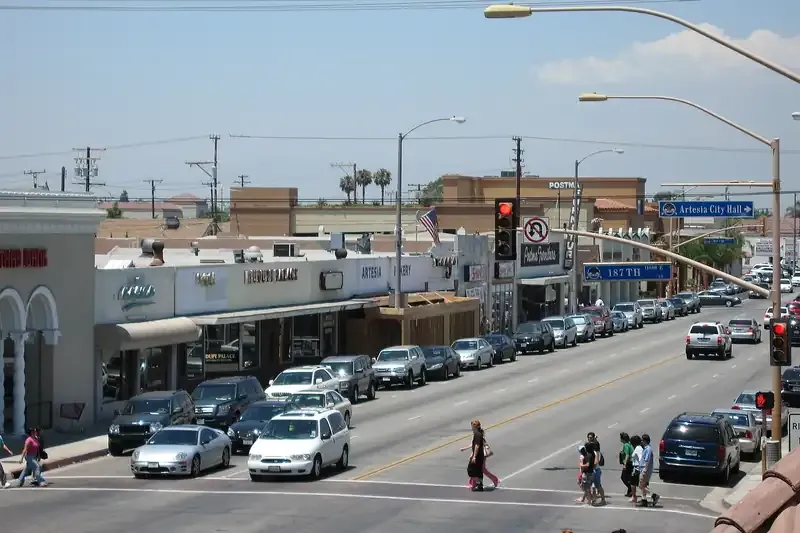
Artesia is one of the smallest cities in the county, about a square and a half miles between Cerritos and Norwalk, and it was named for the artesian wells that once flowed from its farmland. Today Pioneer Boulevard's shops draw visitors from across the region, while the side streets hold postwar homes and newer townhomes.
Answered 24/7
Nights, weekends, holidays
Licensed local plumbers
Licensed in California
Pinpoint locating
Acoustic, thermal, tracer gas
Price ranges up front
Know the range before they come
Houses and pipes in Artesia
Most Artesia homes are single-story houses from the 1950s, built on slabs with copper supply lines after the dairies that once filled this area moved east. Since the 1990s many lots have been redeveloped with two-story homes and small townhome projects, and older apartments cluster near the commercial streets.
Golden State Water serves most Artesia residents through its Artesia system, which pumps groundwater from the Central Basin. A small part of the city is on a different system, so check your bill to see who owns your meter.
Artesia leak patterns
Aging copper in postwar slab homes means steady slab leaks in Artesia, and the hard Central Basin groundwater shortens the life of water heaters. The newer two-story homes and townhomes produce ceiling leaks from upstairs bathrooms more often than pipe failures.
Typical leak costs in Artesia
| Job | Typical range |
|---|---|
| Locating a slab leak | $250–$600 |
| Tracing a ceiling leak in a two-story home | $200–$600 |
| Water heater leak repair or replacement | $150–$2,500 |
| Rerouting one slab line | $1,500–$4,500 |
| Whole-house repipe, postwar Artesia home | $5,500–$12,000 |
Named for its wells
Artesia took its name from the artesian wells that once flowed freely from the ground here, feeding dairies and farms. Groundwater is still a big part of the city's supply: Golden State Water's Artesia system pumps from the Central Basin. That water is hard, and over decades it leaves scale in water heaters and thins copper pipe from the inside.
Dairy land turned to homes
Artesia was dairy country into the 1950s, much of it run by Dutch and Portuguese families, before the dairies moved east to Chino and beyond. The single-story homes built on that land were slab houses plumbed with copper, and those lines are now around seventy years old. Hot-side slab leaks are the most common call.
Rebuilt lots and two-story homes
Since the 1990s, many Artesia lots have been rebuilt with larger two-story homes or small townhome projects. Their plumbing is newer, so leaks tend to come from fixtures upstairs: shower pans, valves and supply lines. Those show up as ceiling stains or damp drywall below.
Pioneer Boulevard and mixed-use buildings
Pioneer Boulevard's shops draw crowds, and some older buildings along it mix retail and apartments. In those buildings, leaks can travel between units and floors. If you live above a shop, tell the plumber, since access may need coordination.
Water heaters in hard water
In Artesia, a tank water heater may last ten years or less unless it is flushed regularly. Signs of trouble include rumbling, rust at the base, or water on the floor around it. Tankless units need a descaling flush every year or two.
Short lots, short lines
Artesia's lots are small, so service lines from the meter to the house are short. That makes yard line leaks easier to find, but also means a leak can sit right under a driveway or walkway. Tracer gas or acoustic tools find it without breaking much concrete.
Reroute or repipe
A single slab leak can often be fixed by rerouting through the attic. Repeated leaks usually mean a full repipe is the better value.
What to tell the plumber
Mention whether your home is an original postwar house or a newer two-story, what you've noticed and whether the meter is moving with everything off.
The Norwalk-owned Artesia system
Most of Artesia buys water from Golden State Water, but a small part of the city, about nine hundred connections, has long been served by a water system owned by the City of Norwalk. Norwalk agreed in 2023 to sell that system to Golden State Water, and the sale has been working its way through state approval. If you're one of those customers, the name on your bill may change, but responsibility doesn't: the water company owns the meter and the street side, and you own everything from the meter to the house.
Little India and the shops on Pioneer
Pioneer Boulevard, the heart of Artesia's Little India, is lined with restaurants, sari shops and jewelers, and the side streets behind it are residential. Some older commercial buildings along Pioneer have apartments above or behind them, and their plumbing has been changed many times. If you live in one, a leak may come from a business's plumbing next door or below, so let the property manager know right away and keep track of when and where you see water.
Artesia's multigenerational homes
Many Artesia households include grandparents, parents and children under one roof, and some have added an ADU or converted a garage for family. More people and more units mean more water use, which can hide a leak on the bill. The meter test is the honest check: with everyone's fixtures off, any movement means water is escaping somewhere.
Cerritos on three sides
Artesia is almost surrounded by Cerritos, and the two cities' homes can look alike from the street. The difference is age: most of Artesia's houses were built in the 1950s, while much of Cerritos came a decade or two later. That makes original copper in Artesia older, and slab leaks more likely, than in the newer tracts just across the city line.
Water heater straps and pans
In Artesia's small homes the water heater is often in a closet inside the house rather than a garage. A drain pan under the tank, piped to the outside, and two earthquake straps protect the floor and the walls around it. If your heater sits on bare floor indoors, ask about adding a pan when it's next serviced.
Tracing a ceiling leak in an Artesia two-story
In the newer two-story homes on rebuilt Artesia lots, a stain on the first-floor ceiling usually comes from an upstairs bathroom or laundry. Running one fixture at a time, such as the shower, then the tub, then the washer, and watching the stain over a day can help narrow it down before the plumber arrives. Thermal imaging then confirms the source.
Artesia's shutoff valves
Many original Artesia homes still have a 1950s gate valve at the front of the house. Close it once a year and open a faucet to see if water still runs. If it does, ask a plumber to replace it with a quarter-turn ball valve before you need it.
Worth a call if you notice
- A warm patch on a tile floor
- White crust and rust at the base of the water heater
- A ceiling stain under an upstairs bathroom
- A meter that ticks with every faucet off
- A bill that rose with no new people or plants
Artesia leak questions
Who is my water provider in Artesia?+
For most homes, Golden State Water. A few customers are on a different system; the bill tells you which.
Is Artesia's water hard?+
Yes. It is mostly local groundwater, which carries enough minerals to leave scale in heaters and on fixtures.
How long does a water heater last in Artesia?+
Often ten years or a little less in hard water, unless it's drained and flushed regularly.
Can a new two-story home have a hidden leak?+
Yes. Most come from fixtures, shower pans or valves rather than the pipe itself, and they show as stains below.