Los Angeles County · 24/7
Leak Detection in Diamond Bar, CA
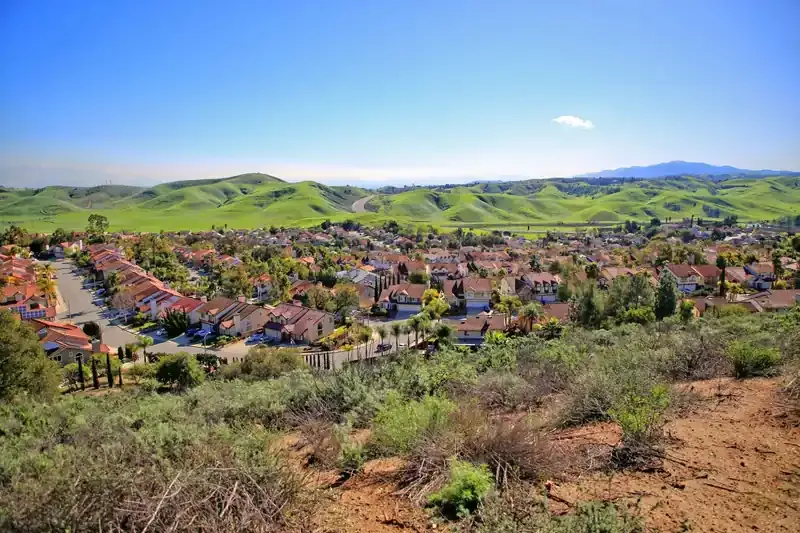
Diamond Bar was a cattle ranch until the 1960s, when it became one of the first large master-planned communities in the region. Its homes climb the hills on curving streets, and much of its copper plumbing is now fifty years old.
Answered 24/7
Nights, weekends, holidays
Licensed local plumbers
Licensed in California
Pinpoint locating
Acoustic, thermal, tracer gas
Price ranges up front
Know the range before they come
Houses and pipes in Diamond Bar
Most Diamond Bar homes were built from the late 1960s through the 1980s, single- and two-story houses on slabs with copper supply lines, many on sloped lots with retaining walls and terraced yards. The Country Estates, a gated area, has larger custom homes on big hillside lots.
Most homes get water from Walnut Valley Water District.
Diamond Bar leaks
Fifty-year-old copper leads to slab leaks and pinhole leaks. Hillside lots bring service line leaks where slopes shift, and pressure can run high in lower zones. Irrigated slopes hide sprinkler leaks.
Typical leak costs in Diamond Bar
| Job | Typical range |
|---|---|
| Locating a slab leak | $150–$550 |
| Tracing a hillside service line | $250–$650 |
| Replacing a pressure regulator | $300–$800 |
| Reroute in a two-story home | $1,200–$4,000 |
| Repipe of a 1970s home | $6,000–$13,000 |
From cattle ranch to planned community
For more than a century, the land that is now Diamond Bar was a working cattle ranch, named for the brand its owners registered in the 1910s. In the 1960s, a developer began turning the ranch into one of the first large master-planned communities in Southern California, with curving streets laid out across the hills, parks and a golf course. Construction continued through the 1970s and 1980s, and the city incorporated in 1989. Most Diamond Bar homes therefore date from a twenty-year window, and the copper supply lines under their slabs are now forty to fifty-five years old. Hard water has been thinning that copper the entire time, and pinhole and slab leaks have become one of the most common plumbing calls here.
Hills, slopes and retaining walls
Diamond Bar was built on hills, and many homes sit on sloped lots with terraced yards and retaining walls. The service line from the meter to the house often runs up or down a slope and through or behind a wall. Over decades, slopes settle, and lines can crack or pull apart at fittings. Water from a leaking line above a retaining wall often finds its way out through the weep holes at the bottom, so a steady trickle from a wall on a dry day is a strong clue. Acoustic equipment helps pinpoint the leak without digging up a terraced yard.
Pressure in a hilly water system
Because Diamond Bar's water system serves homes at many elevations, pressure varies a lot from street to street. Homes lower in a pressure zone can see pressure well above what plumbing is designed for. A pressure regulator near the main shutoff keeps it safe, but regulators wear out after ten to fifteen years, and many original ones are long past that. When a regulator fails, pressure climbs and strains fittings, toilet fill valves, faucet cartridges and the water heater relief valve. Banging pipes, a constantly dripping relief valve or toilets that run on their own are signs. A plumber can test pressure in minutes.
Walnut Valley Water District
Most Diamond Bar homes get water from Walnut Valley Water District. Diamond Bar homeowners own the pipe from the meter to the house; the district handles the meter and the street side, so report any water bubbling there to them first.
Two-story homes and hidden leaks
Many Diamond Bar homes are two stories. A slow leak at an upstairs toilet, shower valve or under a vanity can soak the subfloor and run along joists before showing up as a ceiling stain downstairs, often several feet from the source. Thermal imaging traces the wet area, and moisture meters confirm it, so only a small section of ceiling has to be opened. Acting quickly prevents mold.
Reroute or repipe
When a slab leak appears under tile, rerouting the line through walls and the attic often costs less in total than breaking and replacing tile. In a home that has already had more than one leak, a full repipe replaces all the aging copper at once and ends the cycle. Many owners choose PEX for repipes, since it resists the mineral buildup that wears out copper.
The Country Estates
The gated Country Estates area has larger custom homes on big hillside lots, often with long driveways, pools and extensive landscaping. Service lines can be very long, and pools and irrigation systems add more places for leaks. A meter test with the pool equipment and irrigation off helps separate a plumbing leak from a landscape or pool leak.
Irrigated slopes
Slopes need irrigation to stay planted and stable, and Diamond Bar has a lot of irrigated hillside. Broken sprinkler laterals and valves waste water and can loosen soil. A valve box full of water, sprinklers that don't pop up fully or a section of slope that stays soggy are signs. Turning off the controller and watching the meter shows whether the irrigation is the problem.
Before you call about a Diamond Bar leak
Mention roughly when the home was built, whether it's on a slope, whether it's one or two stories, whether you've noticed high pressure and whether the meter moves with irrigation and fixtures off. Note any wet slopes or weeping walls.
Costs in Diamond Bar
Locating usually falls in the range above, with hillside service lines toward the higher end. Replacing a worn pressure regulator is a modest repair that protects every fixture in the house. For slab leaks, compare a spot repair, a reroute and a repipe; in a fifty-year-old home, the repipe often wins over time.
Reading the meter
Diamond Bar meters sit in curbside boxes; with all taps off, a turning leak dial confirms the problem.
Costs at a glance
In Diamond Bar, most leak searches take one to two hours, with hillside lines on the longer side.
Leak alerts for a fifty-year-old system
Because so much of Diamond Bar's copper is the same age, a small smart water monitor on the main line is a sensible add-on. It learns the household's normal use and sends a phone alert when water runs continuously, which can catch a slab or service line leak within hours rather than at the next bill.
Worth a call if you notice
- A warm patch on a tiled entry or hallway
- Water weeping from a retaining wall
- Banging pipes or very strong pressure
- A ceiling stain under an upstairs bath
- A Walnut Valley Water District bill above normal
Diamond Bar leak questions
Who supplies water in Diamond Bar?+
Mostly Walnut Valley Water District. The meter and street side are theirs.
Is my 1970s Diamond Bar home due for a repipe?+
If it has had a slab leak or pinhole leaks, a repipe is worth pricing.
Why is my slope wet?+
Often a leaking irrigation or service line. A plumber can trace and pinpoint it.