Santa Ana · $150–$500
High water bill in Santa Ana? Finding the leak
In Santa Ana, a high water bill is often the only sign of a leak in a house that has been added to over the years, where pipe runs to back rooms, converted garages and rear units aren't always obvious.
Answered 24/7
Nights, weekends, holidays
Licensed local plumbers
Licensed in California
Pinpoint locating
Acoustic, thermal, tracer gas
Price ranges up front
Know the range before they come
Multiple buildings, one meter
Many Santa Ana lots have more than one structure on one meter: a converted garage, a granny flat, a rear house. Each adds a pipe run, often buried across the yard. When the bill jumps, the leak can be in any of them. A plumber will usually start by closing the valve to each building in turn and watching the meter to see which one stops it.
The usual suspects, in order
- 1
Toilets
Dye-test every tank, including the ones in back units.
- 2
Irrigation and hose bibs
Check for broken heads, stuck valves, and outdoor taps left dripping.
- 3
Lines to back units
Look for a wet or extra-green strip between buildings.
- 4
Under the house
In raised-foundation homes, check the crawlspace for wet soil; in slab homes, feel for warm floors.
Older pipe, older problems
Galvanized steel still turns up in parts of older Santa Ana homes. It tends to leak at threaded joints and rusts from the inside, so a galvanized leak is often the first of several. In slab homes from the 1950s and 1960s, a slab leak is the most likely hidden source.
Bill relief
Santa Ana's water utility bills residents directly. Once the leak is repaired, ask customer service whether a leak adjustment is available and what documentation they need.
What a plumber does next
Most hidden leaks in Santa Ana homes are found within one to two hours once the simple causes are ruled out.
- 1
Isolate each building
Valves to the main house and any rear unit are closed in turn while the meter is watched.
- 2
Pressure-test the leaking side
A gauge on a hose bib shows how quickly pressure drops.
- 3
Check the obvious places
Crawlspace, water heater, toilets and exposed pipe are inspected.
- 4
Locate with equipment
Thermal and acoustic tools pinpoint leaks under slabs, in walls or along buried lines.
Santa Ana's most common causes
| Cause | Clue |
|---|---|
| Running toilet | Dye shows in the bowl or tank refills on its own |
| Line to a rear unit | Meter stops when the back unit's valve is closed |
| Crawlspace leak | Damp soil, rust or drips under the house |
| Slab leak | Warm floor or water heater cycling |
| Irrigation | Soggy lawn, water running to the gutter |
Large households and normal use
Many Santa Ana homes house large families or more than one household. Higher bills can be normal in those cases, so the key is change: is this bill much higher than the same period last year, with the same number of people at home? If so, look for a leak. If the household has grown, the higher bill may simply reflect more use.
Galvanized pipe and slow leaks
Older Santa Ana homes may still have galvanized steel in the walls, crawlspace or service line. Galvanized tends to leak slowly at threaded joints, which may not be dramatic but adds up on the bill over months. If your home has galvanized and the bill is creeping up, have the crawlspace and visible pipe checked. Replacing failing galvanized runs often fixes the leak and improves water pressure at the same time.
Steps to take this week
- 1
Toilets
Dye test every toilet in every unit on the lot.
- 2
Back unit
Close the valve to any rear unit and check the meter.
- 3
Crawlspace
Look under the house for damp soil or drips.
- 4
Call
If nothing turns up and the meter still moves, book leak detection.
Historic homes and mixed plumbing
In Santa Ana's historic neighborhoods, decades of updates often leave a mix of galvanized, copper and plastic pipe under the house. Leaks tend to show up where materials meet, especially where old galvanized has been joined to newer copper without a proper dielectric fitting, which can speed corrosion at the joint. A plumber inspecting the crawlspace can usually spot these joints and tell you which are at risk. Replacing the oldest sections on your schedule is less stressful than waiting for a leak to show up on the bill.
When the leak is between the meter and the house
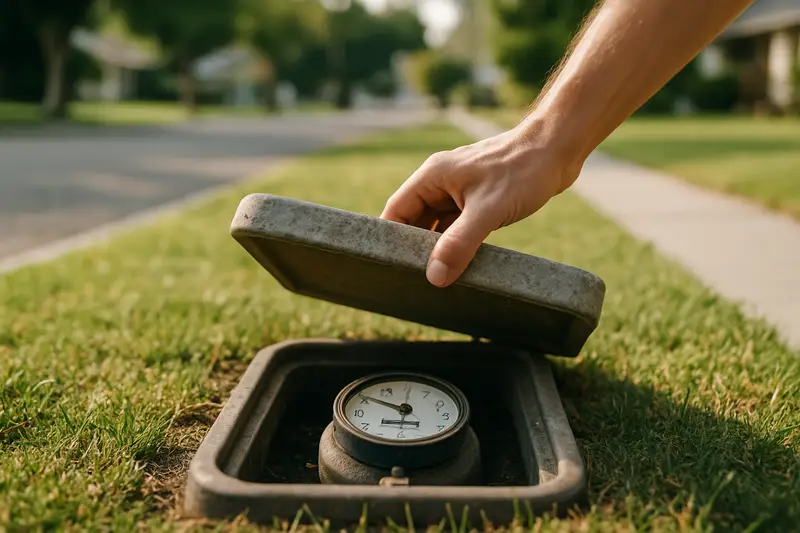
If you close the house shutoff and the meter still moves, and irrigation is off, the leak is on the service line between the meter and the house. On many Santa Ana lots, that line runs under the front yard or a driveway. Look for a wet patch, a strip of greener grass or water in the meter box. A plumber can trace the line and pinpoint the leak so only a small area needs to be dug.
Talking with your water provider
- Have recent bills and meter readings ready
- Explain when you noticed the increase and what you found
- Provide the repair invoice once the leak is fixed
- Ask about adjustments or a payment plan
Checking the water heater
A water heater relief valve that drips into a drain line or out an exterior wall can waste water without anyone noticing. Check where the discharge pipe ends. If it's wet or dripping, the valve may need replacing or house pressure may be too high. In Santa Ana's older homes with heaters in garages or service porches, this is an easy check that's often overlooked.
Leaks you can fix yourself
Some causes of a high bill are simple fixes. A worn toilet flapper costs a few dollars and takes minutes to replace. A dripping faucet may need a new cartridge or washer. A leaking hose bib may need a new washer or packing. Irrigation heads can be replaced with basic tools. If you're comfortable with these jobs, fixing them yourself can bring the bill down quickly.
For anything under the slab, in walls, on the service line or involving gas, call a licensed plumber.
Shared meters on one lot
Where a front house and rear unit share a meter, agree on who reads it and how often. A monthly reading noted on a shared calendar makes a leak obvious long before the bill arrives.
It also settles any disagreement about usage between households before it becomes a dispute over the bill.
Questions people ask
Our property has a back house on the same meter. Who's using the water?+
Close the valve to each building and watch the meter. If one valve stops it, the leak or the extra use is on that side.
How do I find the valve for a rear unit?+
It's often near where the line leaves the main house or enters the rear unit, sometimes in a small box in the yard. A plumber can locate it.
Is galvanized pipe worth repairing?+
Single repairs are fine short-term, but galvanized pipe that's started leaking usually needs replacing.