Norwalk · $150–$650
Water heater leaks in Norwalk
Norwalk's mid-century homes were mostly built with the water heater in the garage. Decades of garage conversions have moved many of them, and each move brings its own leak risks.
Answered 24/7
Nights, weekends, holidays
Licensed local plumbers
Licensed in California
Pinpoint locating
Acoustic, thermal, tracer gas
Price ranges up front
Know the range before they come
When the garage became a room
Converting a garage into living space is common in Norwalk. Sometimes the water heater stays where it was, now inside a bedroom or den closet. Sometimes it's moved outside to an exterior closet or a side yard. Either way, older conversions weren't always done with permits, and the heater may lack a drain pan, proper venting or a relief line that discharges outside.
If your heater is inside a converted room and starts leaking, the water goes onto finished flooring, so act quickly: turn off the heat, close the cold inlet, and contain the water.
Repair or replace
| Leak source | Typical outcome |
|---|---|
| Top connections or shut-off valve | Repair, $150–$650 |
| Relief valve | Replace the valve; check pressure and expansion tank |
| Drain valve | Repair |
| Tank body, heater over 10 years | Replace, $1,500–$4,000 |
What a compliant replacement involves
If the existing installation in a conversion doesn't meet these, the replacement price will include bringing it up to code. That's often a good moment to consider relocating it or switching to tankless.
- Permit from the city and an inspection
- Seismic straps on the upper and lower thirds of the tank
- Relief valve discharge piped to an approved location
- Correct venting and combustion air for gas units
- A drain pan where a leak could damage the building
Tank or tankless for a Norwalk home
Many Norwalk homes were built for a single 40-gallon tank. If the household has grown, or a bathroom was added, a larger tank or a tankless unit may make sense. Tankless heaters save space (useful when a garage has become a bedroom) but need an adequately sized gas line and new venting, which can add significantly to the cost.
For a straightforward replacement in the original location, a new tank is usually the quickest and least expensive choice. The plumber can tell you whether your gas line and venting can support a tankless unit if you're considering one.
Norwalk water heater costs
| Job | Typical range |
|---|---|
| Relief valve replacement | $150–$350 |
| Drain valve replacement | $150–$300 |
| New flex connectors and shutoff | $200–$450 |
| Tank replacement, 40–50 gallon gas | $1,500–$3,300 |
| Relocating a heater out of a converted garage | $2,500–$5,000+ |
Heaters in converted garages
A lot of Norwalk homes have turned the garage into a bedroom, den or rental space, and the water heater often stayed where it was, now inside a closet in a living area. That changes the stakes. A leak that would have run harmlessly across a garage floor now soaks carpet, baseboards and drywall. Converted spaces also tend to have less ventilation around the heater than code expects for a gas appliance. When the heater starts leaking, it's a good time to ask whether it should stay in that spot, move outside to an approved enclosure or be replaced with a unit better suited to the space.
A drain pan piped to the outside, a leak sensor and a clearly labeled shutoff are inexpensive additions that make a converted-garage heater much less risky.
Reading the leak
| Where the water is | Likely cause | Usually |
|---|---|---|
| Dripping from the pipe on the side | Relief valve opening | Valve or pressure issue, repairable |
| Wet at the top connections | Loose or corroded fittings | Repairable |
| Dripping from the drain valve | Worn valve | Repairable |
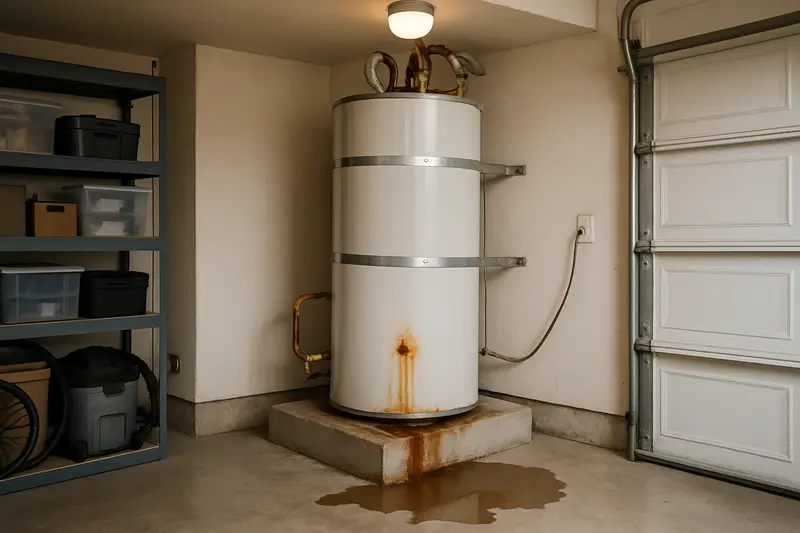
| Pooling under the tank, rust at the base | Tank corroded through | Replace the heater |
| Condensation on a cold morning | Normal when a tank refills | Not a leak |
What a compliant swap includes in Norwalk
- 1
Permit
Water heater replacement normally needs a permit from the city.
- 2
Seismic straps
Two straps anchor the tank to the wall to resist earthquakes.
- 3
Expansion tank
Often required when the home has a pressure regulator or check valve.
- 4
Venting and gas
The flue and gas connector must meet current code, with a sediment trap on the gas line.
- 5
Relief line
The relief valve discharge must run to an approved location.
Making a new heater last
Norwalk's water carries enough minerals to build sediment in a tank over the years. Flush a few gallons from the drain valve once a year, check the relief valve annually and ask about replacing the anode rod every few years. Keeping house pressure in a normal range also helps. These small steps can add years to a tank's life and reduce the chance of a leak.
Garage installs in unconverted homes
Where the garage is still a garage, Norwalk heaters usually sit on a raised platform near the house wall. A leak there can run under stored boxes and soak the base of the drywall shared with the house. Check the heater when you're in the garage, and keep the area around it clear so you can see any water on the floor. If the heater sits on a wooden platform, look for soft or darkened wood, which can be a sign of a slow leak.
Tank trouble or a leak under the garage slab?
If water appears near the heater but the tank and fittings look dry, the source may be a slab leak on the hot line near the heater. Close the cold valve at the heater and check the meter. If the meter stops, the leak is on the hot side, which could be the heater or the hot line under the slab. A plumber can tell the difference quickly.
Signs it's time to replace
- The tank is more than ten to twelve years old
- Water around the base or rust on the tank
- Rusty hot water
- Noisy heating from sediment buildup
Choosing a replacement size
Most Norwalk homes with two or three bedrooms are well served by a 40- or 50-gallon tank. Larger households, or homes with a big soaking tub, may want more capacity or a tankless unit. Your plumber can help size the replacement based on how many people live in the home and how much hot water you use.
If you rent the home
Tenants should report water around the heater to the landlord right away. Shutting the cold valve on top of the tank limits the water lost until a plumber can look at it.
Taking a photo of the leak and the label on the tank helps the landlord and plumber plan the repair.
Questions people ask
My heater is in a converted bedroom closet. Is that allowed?+
It can be, if it's vented and installed to code with proper combustion air and a relief line to the outside. A plumber can tell you what's needed.
How long does a replacement take?+
A like-for-like tank swap usually takes a few hours. Relocations or tankless conversions take longer.
Why does my relief valve keep dripping?+
Excess pressure, overheating, or a worn valve. If the home has a pressure regulator, a missing or failed expansion tank is a common cause.