Long Beach · $150–$500
High water bill in Long Beach? Finding the leak
Long Beach Utilities combines water, sewer and gas on one bill, and sewer charges often follow water use. A hidden leak can raise two lines of the bill at once.
Answered 24/7
Nights, weekends, holidays
Licensed local plumbers
Licensed in California
Pinpoint locating
Acoustic, thermal, tracer gas
Price ranges up front
Know the range before they come
Read the statement first
Find the water usage figure (billing units of hundred cubic feet) and compare it with the same billing period a year ago. A gas increase in winter is normal; a water increase with no change at home isn't. Because sewer charges are commonly based on water use, a leak can push both up.
Long Beach-specific suspects
- Older crawlspace homes: a dripping joint under the floor, often on galvanized or early copper pipe
- East Long Beach slab homes: a slab leak on the original hot line
- Coastal homes: corroded hose bibs and water heater fittings that drip constantly
- Duplexes and backhouses: a long line to the rear unit, sometimes very old
- Condos: a leak in your unit's line inside a shared wall
The meter test, for crawlspace homes
- 1
Turn everything off
Taps, appliances, irrigation, any rear unit's fixtures.
- 2
Watch the low-flow dial
If it moves, water is leaving the system.
- 3
Check the crawlspace
With a flashlight, look along pipe runs for drips, wet soil or mineral deposits at joints. Don't crawl in if there's standing water near wiring.
- 4
Close the house valve
If the meter still moves, the leak is on the service line outside.
Asking for an adjustment
Call Long Beach Utilities customer service once the leak is repaired. Have the dates and the plumber's invoice ready; adjustments generally depend on prompt repair.
Rear units and older lines
Long Beach has many lots with a second unit at the back: a duplex, a converted garage or a small rear house. Often the water line to that unit branches off the main service and runs under the yard or driveway. These lines were frequently added years after the house was built and may be older galvanized pipe or have several joints.
If closing the main house valve stops the meter but closing the rear unit's valve doesn't, the leak is in the rear unit or its line. Many Long Beach plumbers start with exactly that test, and it can save a lot of searching.
Where Long Beach leaks hide
| Home type | Where to look |
|---|---|
| Raised craftsman or Spanish home | Crawlspace lines, especially galvanized joints |
| Postwar slab home in east Long Beach | Under the slab, hot side first |
| Condo or apartment | Toilets, water heater, shared walls |
| Home with a large yard | Irrigation valves and lateral lines |
Crawlspace clues
In raised homes, a high bill often has a visible answer under the house. Look for darker soil beneath pipes, rust stains running along galvanized lines, white mineral crust at fittings and a musty smell when you open the hatch. A drip that's been going for months can leave a noticeable wet patch. If you see one, photograph it before calling. It helps the plumber bring the right parts.
If the crawlspace is dry and the meter still moves, the leak may be in the service line from the street, in irrigation or in a slab addition.
Apartments and multi-unit buildings
In many Long Beach apartment buildings, one meter serves several units, and the owner pays the bill. A single running toilet in one unit can raise the bill noticeably. Owners should ask tenants to report running toilets and drips, and check fixtures during routine inspections. A building-wide dye test of toilets is an easy first step when the bill jumps.
Quick checks
- Dye test every toilet
- Turn off irrigation and check the meter
- Look under sinks and around the water heater
- Check the crawlspace with a flashlight
Galvanized joints in older homes
In Long Beach's older neighborhoods, many homes still have sections of galvanized steel pipe, often in the crawlspace or where the service line enters the house. Galvanized tends to leak slowly at threaded joints as it rusts, rather than failing all at once. A slow, constant drip under the house might never show up indoors, but it adds steadily to the bill. If your home has galvanized and your usage has been creeping up, have a plumber look at the crawlspace joints. Replacing the remaining galvanized often fixes the leak and improves water pressure at the same time.
Slab homes in east Long Beach
In the postwar slab neighborhoods, an unexplained rise in usage often points to a slab leak, especially if floors feel warm or the water heater runs more than usual. Close the cold valve at the water heater and watch the meter; if it settles, the leak is on the hot side. If it keeps moving, the leak is on the cold side or outside. Either way, a plumber with acoustic equipment can locate it.
Getting a bill adjustment
- 1
Fix it fast
Most adjustment programs require prompt repair once a leak is found.
- 2
Document
Keep the plumber's invoice, photos and the dates of discovery and repair.
- 3
Call the utility
Ask what adjustments or payment arrangements are available.
- 4
Follow up
Check the next bill to confirm usage is back to normal.
Hose bibs and outdoor fixtures near the coast
Outdoor faucets near the ocean corrode faster than inland, and a hose bib that drips steadily can waste more water than people expect, especially if it's behind a planter or along a side yard nobody uses. Walk around the house and check every outdoor faucet, the washing machine hookup in the garage and any outdoor shower. Replacing a worn washer or a corroded bib is quick and inexpensive, and it can account for a surprising share of a high bill in older Long Beach homes.
Leak or a rate change?
Before assuming a leak, check whether your rate or billing period has changed. Look at the gallons or units used, not just the total. Compare with the same period last year. If usage is up significantly and nothing has changed at home, start looking for a leak with the toilet and meter tests.
Read the meter yourself
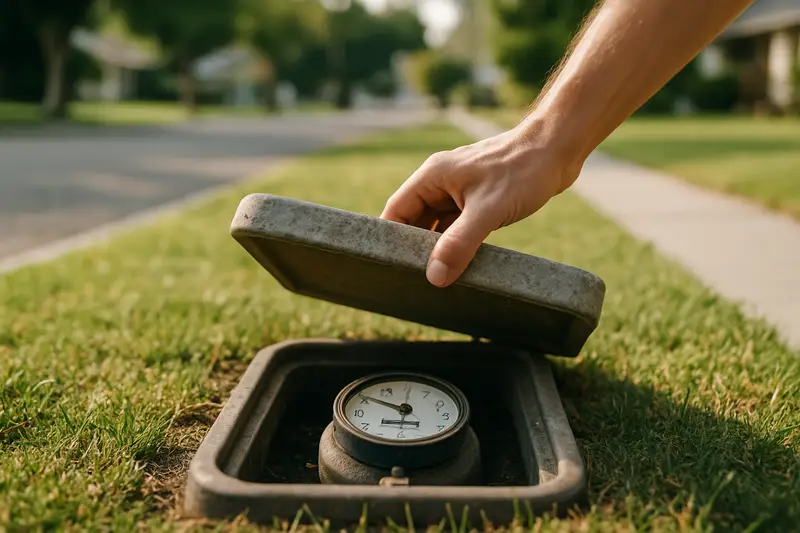
Long Beach meter boxes are usually near the sidewalk. A monthly reading of your own gives you a baseline that makes any jump easy to spot.
Write the reading and date on your phone each month so the comparison is always at hand.
Questions people ask
Why did my sewer charge go up too?+
Sewer charges are often calculated from water use, so a leak that raises water usage can raise the sewer line as well.
My duplex shares one meter. How do I know which unit is leaking?+
A plumber can close valves to each unit in turn and watch the meter to isolate the leaking side.
Is a crawlspace leak an emergency?+
Not usually, but standing water near electrical wiring is a hazard. Shut off the water and keep out of the crawlspace until it's checked.